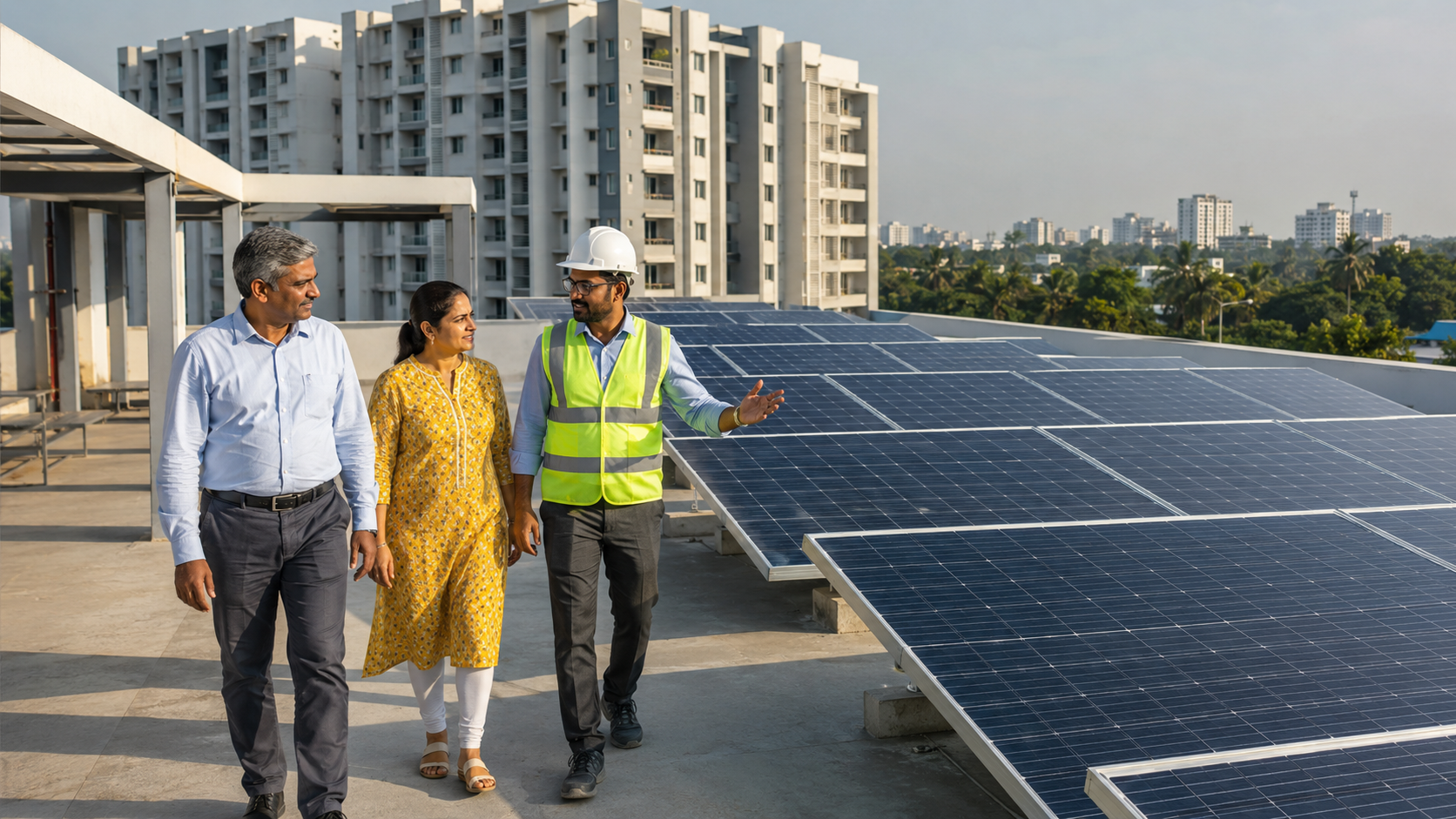
Apartment rooftops can become productive energy assets, but a multi-owner building cannot be planned like a single house. The association must decide who owns the system, which electricity connection receives the solar energy, how costs and benefits are allocated, and who is responsible for long-term operation.
In Chennai, the most straightforward apartment use case is often a plant connected to the dedicated common-facility service. Daytime generation can serve pumps, lifts, corridor lighting, security systems, clubhouses, sewage-treatment equipment, offices and eligible EV-charging loads.
Can a Chennai Apartment Install Rooftop Solar?
Yes. A resident welfare association or group housing society can install grid-connected rooftop solar for common facilities, subject to roof rights, association approval, structural and electrical suitability, the correct TNPDCL service connection and current scheme rules. PM Surya Ghar provides CFA for eligible GHS/RWA common-facility systems at 18,000 per kW, subject to the scheme's capacity limits and conditions.
The financial case is strongest when common loads operate during solar hours. The system should be sized from the common-service bill and interval load, not simply from the number of flats or the total roof area.
Where Can Apartment Solar Power Be Used?
A common-facility rooftop plant can support shared loads connected to the eligible common service, including:
- Water-supply, borewell and pressure pumps
- Lifts and lift-room auxiliary equipment
- Corridor, basement, landscape and exterior lighting
- Security systems, access control and association office loads
- Sewage-treatment and water-treatment equipment
- Clubhouse, gym or community-hall daytime loads
- Common EV charging where permitted by the scheme and connection design
- Solar connected to the common service does not automatically reduce every resident's individual electricity bill. Supplying or crediting individual flats requires a specifically approved metering and allocation arrangement. The association should not promise flat-level savings until TNPDCL confirms the connection pathway.
PM Surya Ghar Subsidy for RWAs and Group Housing Societies
The central scheme supports GHS/RWA rooftop solar for common facilities, including eligible EV charging, at 18,000 per kW in ordinary-category states. The supported capacity is capped at 500 kW and is also limited to 3 kW per house.
For example, an association with 40 homes has a per-house ceiling of 120 kW, even if the roof can hold more. If the technically and financially appropriate common-facility plant is 80 kW, the CFA would be calculated on eligible capacity under the current rules rather than forcing the project to reach the ceiling.
The scheme guidelines also state that the common-facility connection must be dedicated to common facilities and not used to supply electricity directly to individual residential consumers. The upper limit considers individual rooftop systems installed by residents within the society, so the association should reconcile any existing subsidised systems before finalising capacity. CFA is not automatic. The project must follow the National Portal, registered-vendor, DCR, DISCOM inspection, metering, commissioning and documentation requirements. The association should verify the live PM Surya Ghar and TNPDCL process before collecting funds.
How Much Can an Apartment Save with Solar?
Savings depend on solar generation, common-load timing, the retail tariff avoided through self-consumption, export credit, system downtime and operating expenses. A useful first-stage formula is:
Annual benefit = solar used directly × avoided import tariff + eligible export × export credit - annual operating costs.
This formula explains why load matching matters. If pumps, treatment plants and clubhouse equipment can run during daylight, more generation is consumed directly. If most common demand occurs after sunset, an on-grid plant will export more during the day and import more later, which can reduce the value per solar unit under net feed-in.
Do not multiply total solar generation by the highest slab on one bill and call the result guaranteed savings. A bankable estimate should use at least 12 months of bills, available interval data, realistic losses, the current billing method and a conservative degradation assumption.
Step-by-Step Approval Process for an Apartment Association
- Create an energy baseline. Collect 12 months of common-service bills, sanctioned load or demand, operating schedules and outage history.
- Confirm roof and service ownership. Check title documents, association rights, access routes, existing telecom or water assets and the common electricity connection.
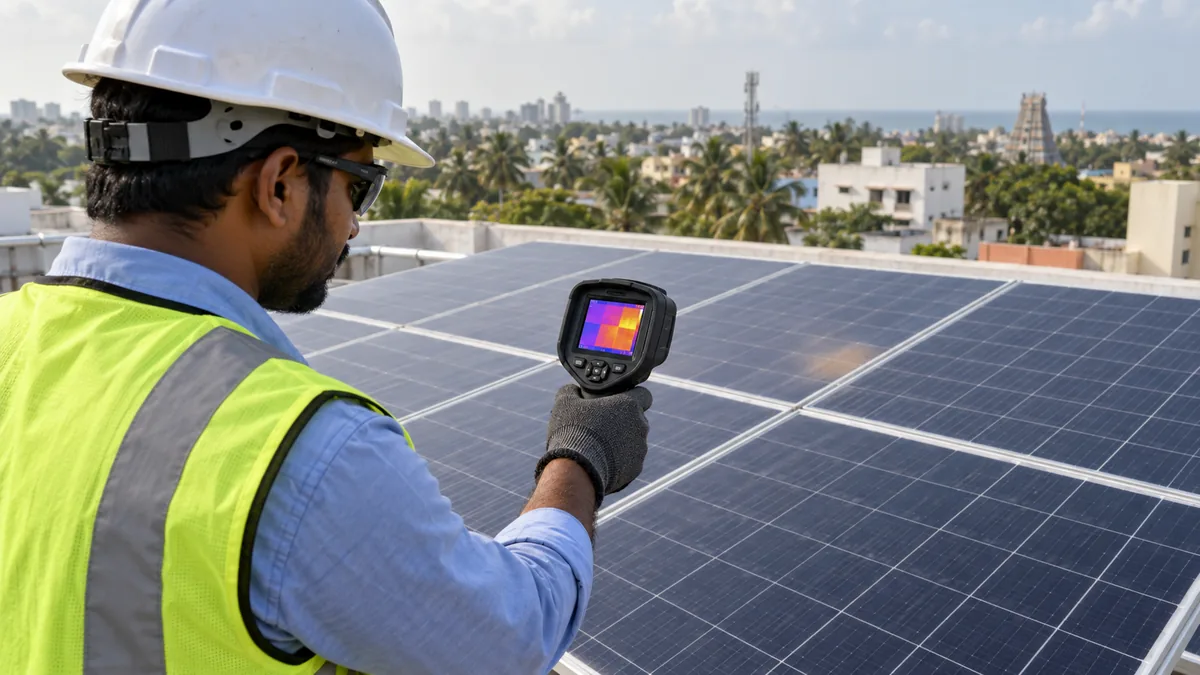
- Obtain a preliminary technical survey. Assess shadow-free area, structure, waterproofing, wind exposure, cable routes, earthing and fire access.
- Select the metering and subsidy route. Decide whether the proposal is a common-facility CFA project, a non-CFA plant or another approved arrangement.
- Prepare a transparent feasibility report. Show proposed capacity, expected generation, self-consumption, export, cost, CFA assumption, payback sensitivity and maintenance plan.
- Pass the association resolution. Record the approved budget, vendor-selection authority, roof-use decision, funding method and authorised signatories.
- Apply through the correct portals and wait for the required approvals before installation.
- Install, inspect and commission. Reconcile equipment, DCR and serial-number records with the approved submission.
- Monitor performance and bills. Compare actual generation, self-consumption, export and common-service charges every month.
Documents the Association Should Prepare
- Association registration and authorised-signatory records
- Resolution approving the project, budget and rooftop use
- Common-service electricity bills and consumer details
- Roof plan, ownership or right-to-use evidence and site photographs
- Structural-suitability assessment where required
- Single-line diagram, layout, generation estimate and equipment schedule
- Vendor registration, quotations, warranties and service commitments
- DCR, ALMM and serial-number documentation applicable to the chosen route
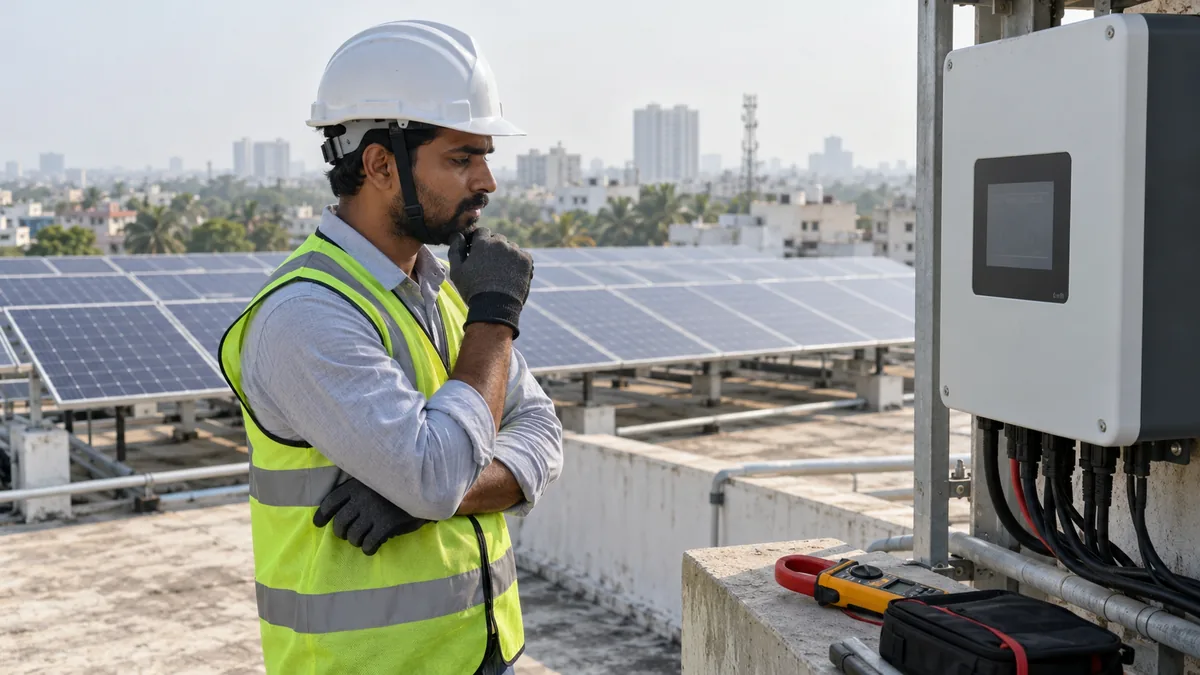
- TNPDCL approvals, inspection report, agreement and commissioning records
- The exact upload list depends on the live portal and consumer category. Keep one controlled digital folder so that the names, capacity and model numbers remain consistent across every form.
How to Size Solar for Apartment Common Areas
Begin with the daytime base load, not the highest monthly bill. Pumps may operate in short bursts, lifts have variable demand and lighting often peaks after sunset. Interval data reveals how much load is actually present while solar is generating.
The design must also preserve maintenance paths, overhead-tank access, fire routes and safe distance from roof edges. High-efficiency modules can help where the usable roof is constrained, but structure spacing, tilt and shading still determine the final capacity.
A sensible design balances four ceilings: eligible scheme capacity, TNPDCL connection limits, usable roof capacity and the load that can absorb solar economically. The smallest of these constraints often controls the project.
Should an Apartment Add Battery Storage?
Battery storage is not required for a normal on-grid common-area plant. Add storage only when the association assigns a clear value to backup or load management.
A hybrid system can support selected emergency lights, security, gates, communications or a defined pump. Lifts, large pumps and treatment equipment have high power or surge requirements and should not be included without detailed engineering.
Ask the vendor to separate the solar payback from the battery case. Battery benefits may include outage continuity, diesel reduction or operational safety, but the storage system adds capital cost, conversion losses, warranty limits and replacement exposure.
Common Apartment Solar Mistakes
- Sizing from roof area without studying the common-load profile
- Assuming common solar will automatically credit every flat
- Treating the maximum CFA capacity as the ideal system size
- Ignoring waterproofing, structure and future roof maintenance
- Selecting the lowest quote without normalising scope and warranties
- Promising a fixed payback without tariff and export sensitivity
- Failing to nominate a committee member or manager for performance review
Questions to Ask Solar Vendors
- Which common-service connection will receive the solar plant?
- How much generation will be self-consumed and exported each month?
- What subsidy amount is assumed, and which conditions must be satisfied?
- Are structure, waterproofing interfaces, safety lines and access included?
- Who handles National Portal and TNPDCL documentation?
- What performance, product and workmanship warranties apply?
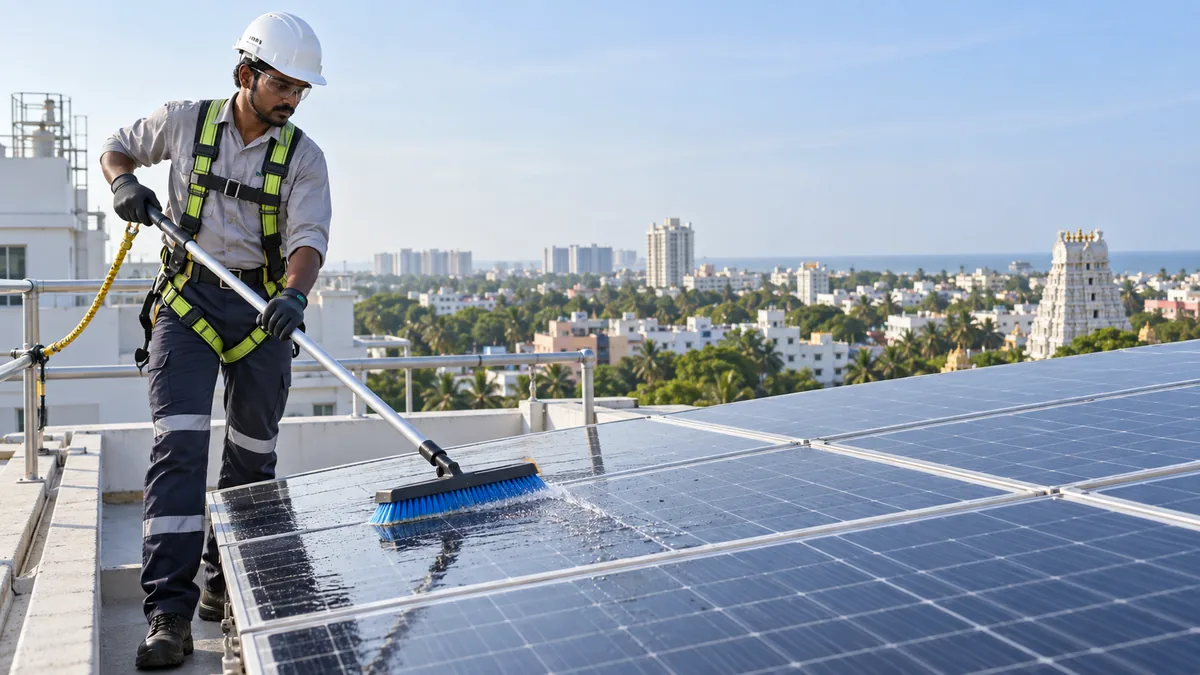
- How will monitoring alerts, cleaning and annual inspections be managed?
- Viryasys Technologies' Solar Company in Chennai team can prepare the load study, roof survey, concept design, association proposal, approvals documentation, installation and post-commissioning plan.
Conclusion
Rooftop solar can reduce apartment common-area electricity costs when the project is connected to the right service and designed around real daytime loads. PM Surya Ghar can improve affordability for eligible RWA and group-housing common-facility systems, but the 18,000 per kW rate and capacity ceilings are only one part of eligibility.
A successful association project combines a clear resolution, evidence-based sizing, roof and electrical due diligence, transparent vendor comparison, TNPDCL coordination and monthly performance review. That turns a shared roof into a well-governed long-term asset.