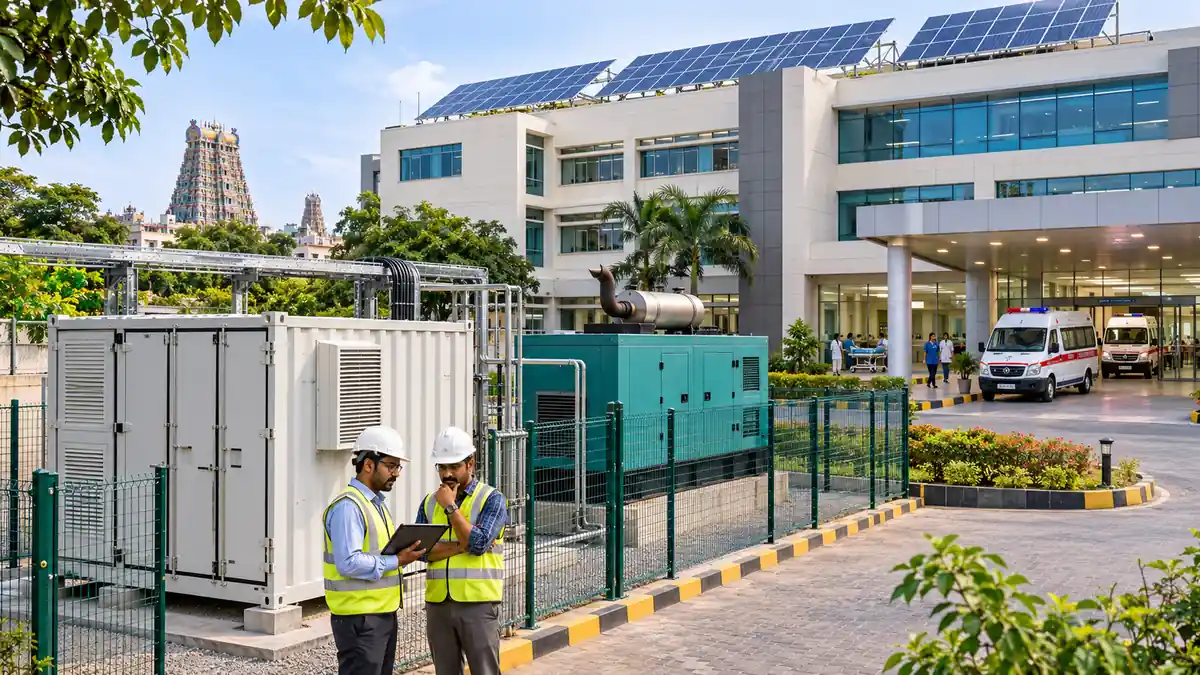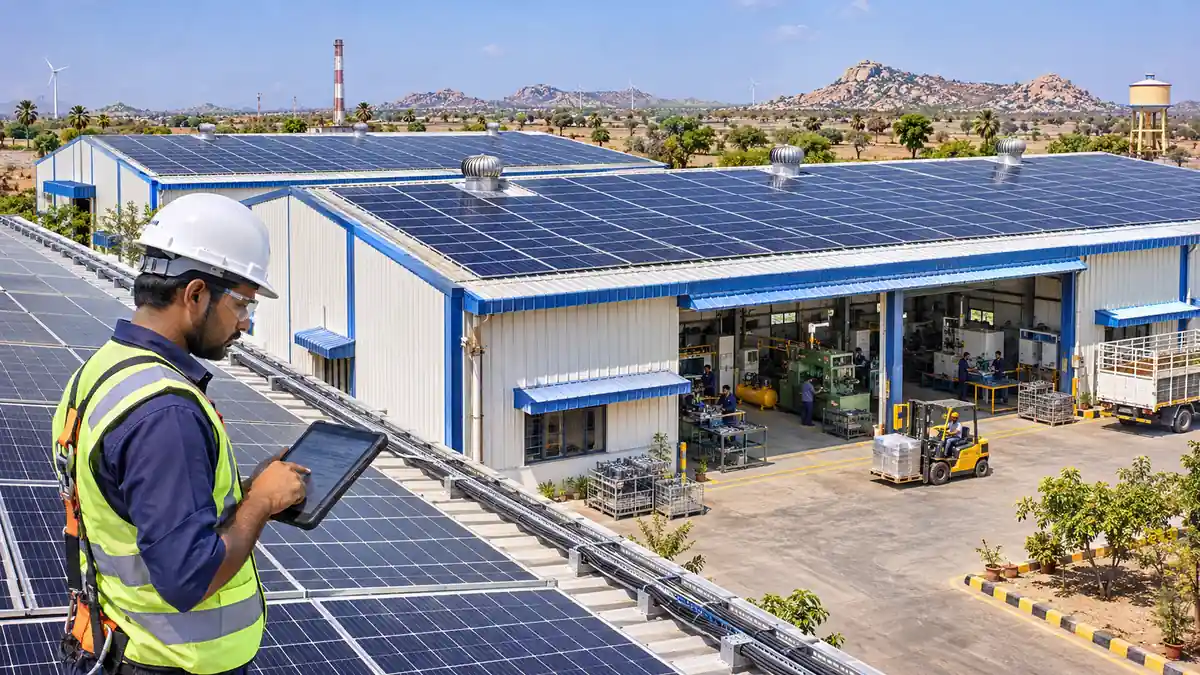
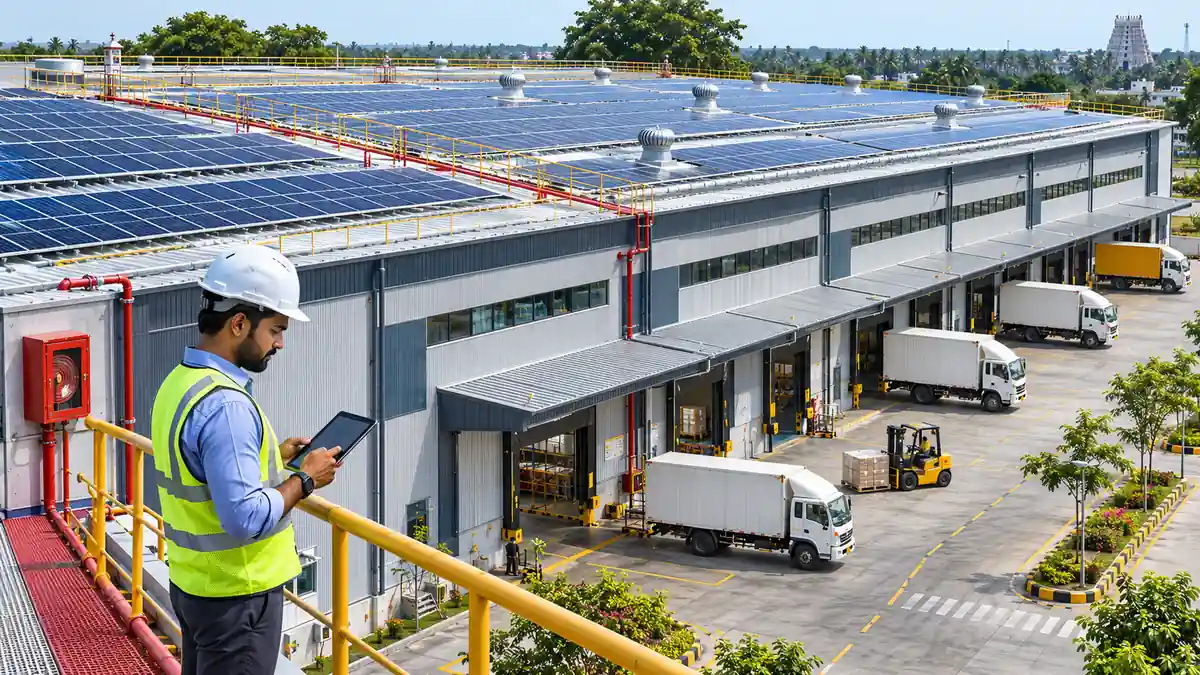
Warehouses across the Kanchipuram, Sriperumbudur, Oragadam and Sunguvarchatram industrial belt may have enormous roofs. That does not mean the roof should be filled with solar. A conventional warehouse can have relatively low electricity demand, while cold storage, automated fulfilment centres and EV-enabled logistics hubs may have strong round-the-clock loads.
The best solar system is therefore based on the facility’s operating model and meter data, not square footage alone.
Viryasys Technologies supports feasibility and implementation through its solar company in Kanchipuram and solar EPC company in Chennai.
How Should a Kanchipuram Warehouse Size Rooftop Solar?
Use 12 months of bills and interval data to identify dependable daytime demand from lighting, ventilation, offices, material handling, refrigeration, charging and utilities. Compare that demand with a measured, structurally usable roof and the applicable connection limit.
For a low-load warehouse, a smaller system with high self-consumption may produce better returns than a roof-filling array. For cold storage or automation-heavy operations, the electrical load may support a much larger plant.
Four Warehouse Types, Four Different Solar Profiles
Conventional ambient warehouse
Loads may consist mainly of lighting, office HVAC, fire pumps on standby, security systems, dock equipment and occasional charging. The roof can be far larger than the energy requirement.
Cold storage
Compressors, condensers, pumps and controls operate for long hours. Cooling demand may rise in hot sunny periods, creating strong alignment with solar. Starting current, refrigeration reliability and night load still require study.
Automated fulfilment centre
Conveyors, sorters, robotics, IT, ventilation and multiple shifts can create a steadier load. Interval data is essential because automation cycles and peak dispatch windows can change demand quickly.
Multi-tenant logistics park
The roof owner, electricity consumer and solar investor may be different parties. Metering, roof rights, lease term, cost allocation and change-of-tenant risk can be as important as engineering.
Why “Large Roof” Can Be a Sizing Trap
Suppose a warehouse roof can physically host 500 kW, but the facility’s dependable daytime load is only 120 kW and weekend use is much lower. A 500 kW plant could export a large share of production.
If exported energy has a lower value than electricity consumed on site, the bigger plant can have a longer payback even though it produces more units.
The screening sequence should be:
- Measure hourly demand.
- Calculate usable roof capacity.
- Confirm connection and settlement limits.
- Simulate generation at multiple sizes.
- Compare self-consumption and export.
- Select the capacity that meets the investment objective.
The Viryasys solar sizing guide provides the consumption-first foundation.
Roof Engineering and Fire Access
Remaining roof life
A solar plant should not be mounted on roof sheets that will need replacement soon. Inspect corrosion, leaks, fasteners, purlins, previous repairs and warranty conditions.
Structural and wind design
Large warehouse roofs have edge and corner wind zones, long spans and thermal movement. The structure and fastening method must be designed for the actual building and site.
Fire paths and smoke vents
Preserve access, separation, smoke vents, skylights, drainage, fire-fighting routes and any required clear zones. Coordinate with the park’s fire strategy and insurer.
Safe maintenance
Include ladders, walkways, lifelines, module access and isolation points. A full-roof layout without maintainable paths is not a complete design.
Tenant, Landlord and PPA Questions
When the warehouse is leased, define:
- Who owns the roof and can grant access?
- Who owns the electricity meter?
- Who pays for solar and who receives the savings?
- Is the lease long enough for the financing term?
- What happens if the tenant leaves or expands?
- Who repairs roof leaks under the array?
- Who carries insurance and restoration responsibility?
- Can the system transfer to a new tenant?
A solar power purchase agreement may reduce upfront investment, but long-term price, escalation, minimum offtake, performance, termination and roof-access clauses require careful review.
Can EV Charging Improve Solar Utilisation?
Midday charging of forklifts, material-handling batteries or delivery fleets can increase on-site use of solar generation. Do not add chargers merely to absorb excess. Build a fleet schedule, charger power plan, simultaneous-demand estimate and operational policy.
BESS may be evaluated if chargers create sharp peaks, if solar must be shifted to an evening fleet window, or if critical logistics operations need backup. The Viryasys BESS guide explains kW, kWh and control requirements.
How to Estimate Warehouse Solar Generation
Annual generation = Installed solar capacity × site-specific annual yield.
The model should include:
- Roof orientation and tilt.
- Temperature and soiling.
- Row and equipment shade.
- Inverter and cable losses.
- Grid unavailability.
- Maintenance downtime.
- Module degradation.
Do not use one statewide production guarantee. Require a design-specific simulation and monthly generation profile.
Cost Drivers
Warehouse solar cost depends on:
- System size and electrical voltage.
- Roof type, height and access.
- Structural strengthening.
- Mounting and waterproofing method.
- Long cable routes across large buildings.
- Transformer and switchboard changes.
- Walkways, lifelines and fire clearances.
- Metering, approvals and testing.
- Crane, lifting and operational restrictions.
- Monitoring and O&M.
- Tenant or park coordination.
Compare bids on a scope matrix. A low price may exclude structural validation, electrical upgrades, roof warranty coordination or ongoing service.
ROI Calculation for a Warehouse
Separate self-consumed and exported energy.
Annual net benefit = Self-consumed units × avoided applicable energy cost + exported units × approved export value − O&M and recurring charges.
Simple payback = Net project investment ÷ annual net benefit.
For a lease or PPA, compare the contracted solar tariff and escalation with the expected grid cost, while modelling vacancy, change-of-use and minimum-offtake risk.
Run sensitivity cases for:
- Lower tenant occupancy.
- Lower warehouse throughput.
- Higher future automation or EV load.
- Reduced generation.
- Roof repairs or inverter replacement.
- Tariff and settlement changes.
Grid-Tied, Hybrid or Open Access?
Grid-tied rooftop
Often suitable for strong on-site daytime demand. It normally shuts down during a grid outage.
Solar plus BESS
Consider for critical operations, peak management, solar shifting or DG reduction. Size from the use case, not simply as a percentage of rooftop solar unless a rule specifically applies.
Open-access solar
May be evaluated where rooftop area or load alignment is insufficient and the consumer is eligible. Compare delivered energy cost, charges, losses, contract tenure and regulatory risk.
See Ground-Mounted Open-Access Solar for Chennai Businesses.
Warehouse Solar Buyer Checklist
- Twelve bills and interval data reviewed.
- Facility type and operating calendar documented.
- Roof owner and meter owner confirmed.
- Roof life and structural capacity checked.
- Fire paths and drainage protected.
- Self-consumption modelled at multiple sizes.
- Cold-storage or automation loads measured separately.
- EV charging included only with an operational plan.
- Grid, export and approval framework verified.
- CAPEX, loan and PPA scopes compared.
- O&M access and response responsibilities defined.
Conclusion
Rooftop solar can turn a Kanchipuram warehouse roof into a productive energy asset, but the array should be sized to the business below it. Ordinary storage, cold chain, automated fulfilment and multi-tenant parks have very different load and ownership profiles.
Share bills, interval data, roof drawings, lease details and future charging plans with the Viryasys solar company in Kanchipuram to evaluate the right capacity and commercial model.