
A solar power purchase agreement, or solar PPA, lets a business buy electricity generated by a solar project under a long-term contract. Instead of purchasing the solar asset outright, the buyer pays for eligible energy delivered under agreed commercial and technical rules.
For Chennai businesses, a PPA can reduce capital expenditure and transfer some development and operating responsibilities to a solar developer. But a quoted energy tariff is not enough to judge the deal. Decision-makers must understand delivery structure, landed cost, generation risk, grid charges, metering, security, performance obligations and what happens at the end of the contract.
Compliance note: This article is educational, not legal, regulatory, tax or investment advice. Applicable regulations, charges and contract terms must be verified for the specific project at signing.
How Does a Solar PPA Work?
Under a solar PPA, a developer or project company finances, builds, owns and usually operates the solar system. The consumer agrees to purchase the electricity that qualifies for billing under the contract, often for a multi-year term. The PPA defines the price or price formula, delivery point, metering, billing, performance responsibilities, security, change-in-law treatment, default remedies and end-of-term options.
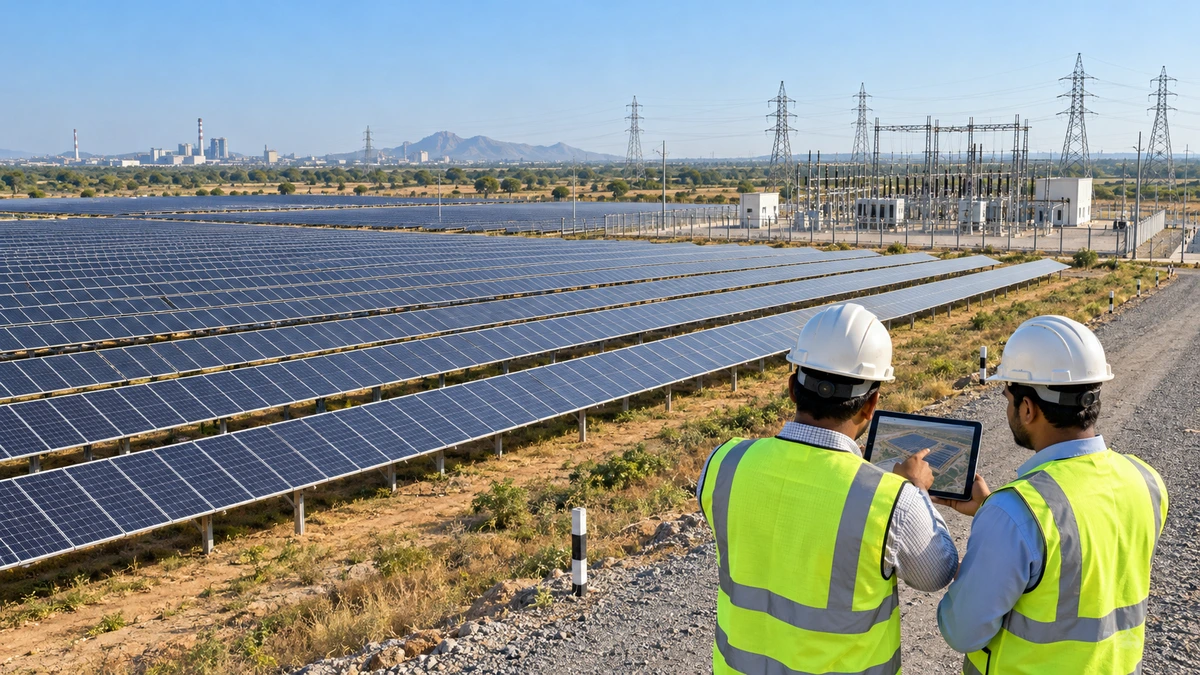
An onsite PPA supplies energy from a system installed at the consumer's premises. An offsite or open-access PPA supplies energy from a remote project through the electricity network, subject to eligibility, connectivity, scheduling, metering and applicable regulations and charges.
The Four Parties a Buyer May Need to Understand
A PPA is often described as a two-party agreement, but the operating structure may involve more participants:
- Consumer or offtaker: the business purchasing solar electricity.
- Developer or generator: the entity developing and owning the plant.
- EPC and O&M providers: the teams that construct and maintain it.
- Utility, network and system operators: the entities involved in connectivity, metering, wheeling, settlement and grid compliance for offsite supply.
The developer may perform EPC and O&M itself or appoint contractors. The PPA should still identify who is accountable to the buyer when availability, safety or billing issues arise.
Onsite Rooftop Solar PPA
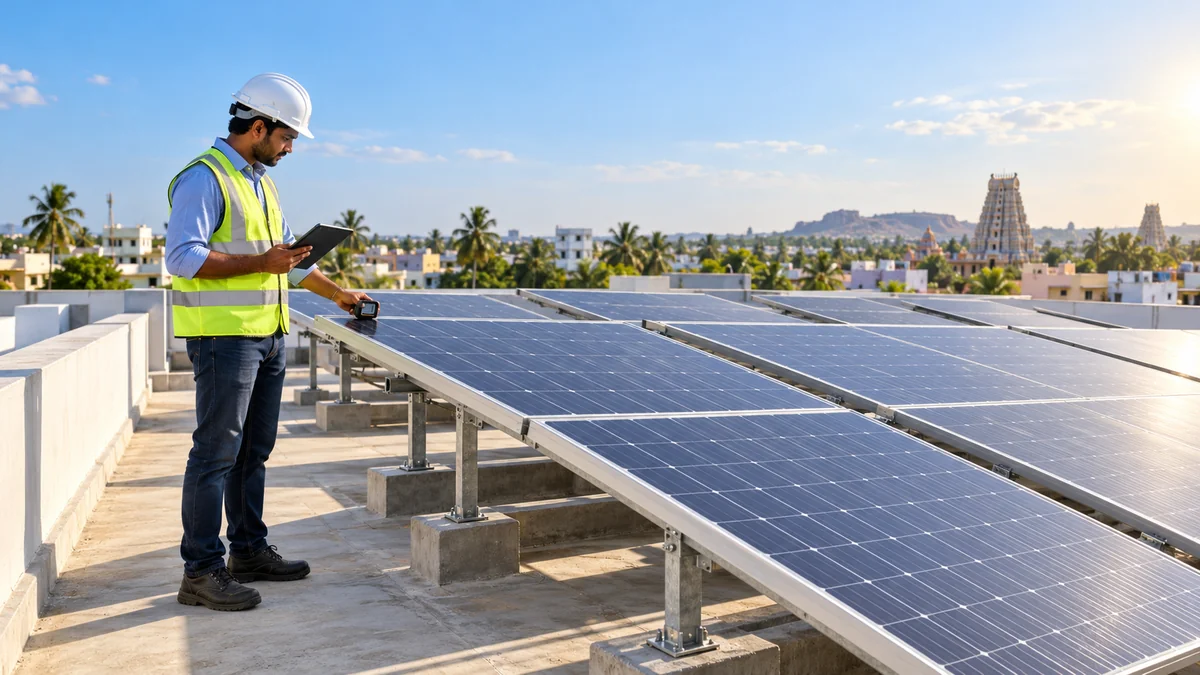
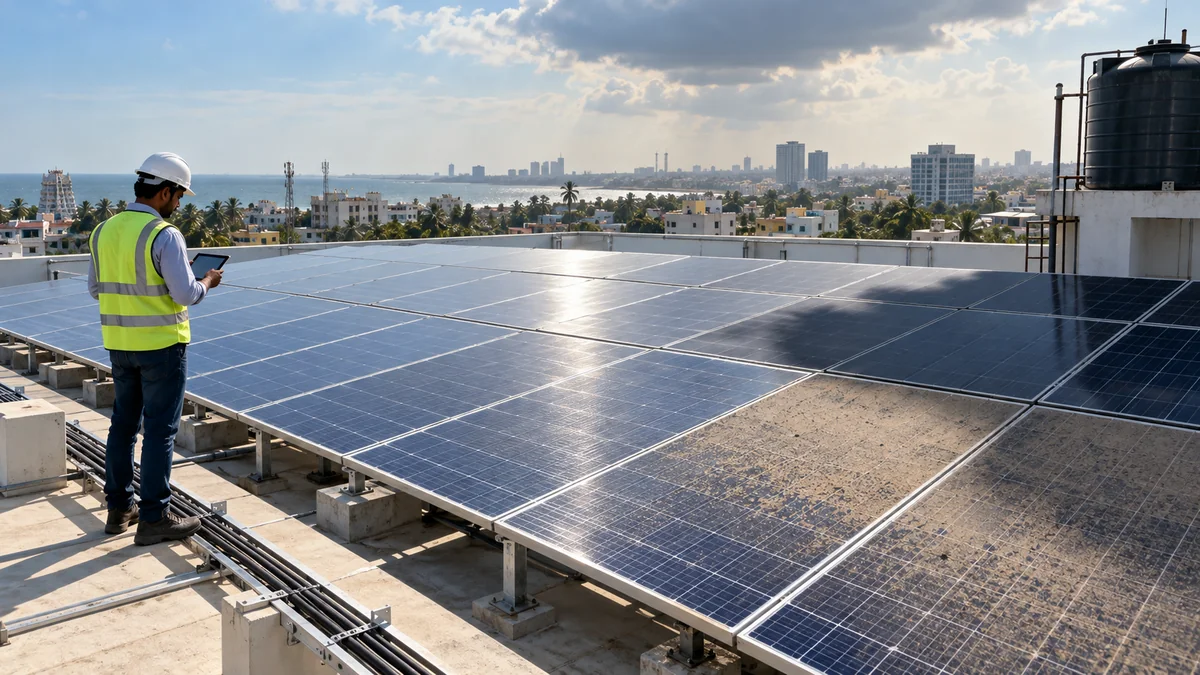
In an onsite PPA, the developer installs a solar plant on the buyer's roof, carport or available premises. Solar power serves the site's electrical system behind the consumer meter, subject to the approved design. Depending on the applicable arrangement, surplus may be limited, exported or settled under the relevant utility mechanism.
Potential advantages
- No remote wheeling path for behind-the-meter consumption
- Lower initial capital outlay than asset ownership
- Direct use of solar where electricity is consumed
- Developer responsibility for agreed O&M and performance
- Visible sustainability asset at the operating site
Questions to resolve
- Who owns the roof rights during the PPA term?
- Is the roof structurally suitable and waterproof?
- Who pays for roof repairs or relocation of modules?
- What happens if the tenant moves or the building is sold?
- How are shutdowns, access and safety coordinated?
- What happens to the system at expiry or early termination?
The roof-licence or site-access agreement is as important as the energy price. It must align with lease tenure, building ownership and operational access.
Offsite or Open-Access Solar PPA
An offsite PPA uses a remote solar plant, often ground-mounted, to serve an eligible consumer through the network. The buyer can access a larger project without needing sufficient rooftop space, but the commercial structure is more complex.
In addition to the generator's tariff, the delivered cost may include applicable transmission, wheeling, scheduling, metering, banking, cross-subsidy, additional surcharge, losses, taxes or other regulatory components. Exemptions and charges can change with law and project structure.
An open-access proposal should therefore show a landed-cost calculation, not only the plant-gate tariff. A Chennai business considering this route should review the companion guide to ground-mounted open-access solar after that article is published.
Third-Party PPA, Captive and Group-Captive Models
These terms should not be used interchangeably.
Third-party sale
The generator sells electricity to an unrelated consumer under an agreed PPA. Regulatory charges and conditions depend on the current framework.
Captive model
The consumer holds the required ownership and meets applicable consumption conditions in the generating plant. Eligibility must be maintained and documented.
Group-captive model
Multiple eligible consumers participate in a captive project and must collectively and individually comply with the applicable ownership and consumption rules.
Captive structures may provide different charge treatment, but they also introduce equity, governance, compliance and exit obligations. Legal and regulatory specialists should validate the structure before investment or signature.
PPA Tariff Versus Landed Cost
The PPA tariff is the price defined for solar energy at the contractual delivery point. Landed cost is the effective cost to the consumer after all applicable delivery components and adjustments.
A practical comparison may include:
- PPA energy charge
- Network and open-access charges, where applicable
- Approved energy losses
- Scheduling, forecasting and metering costs
- Banking charges or lapse of unused banked energy
- Taxes, duties and levies
- Minimum offtake or take-or-pay exposure
- Security, letter-of-credit and transaction costs
- Expected curtailment or non-delivery risk
- Cost of replacement grid electricity when solar is unavailable
Compare the landed solar cost with the portion of the utility bill it actually replaces. A solar unit may not offset every component of a conventional electricity bill.
How Billing Usually Works
The contract should define the revenue meter, data source, billing period and reconciliation process. A typical sequence is:
- Approved meters record delivered or consumed solar energy.
- Meter data is validated against the contractual delivery point.
- Adjustments for losses, curtailment, banking or deemed generation are applied if relevant.
- The seller issues an invoice using the agreed tariff formula.
- The buyer checks the invoice against meter and grid statements.
- Disputed amounts follow a defined resolution process.
The buyer should retain access to raw and interval data. Dashboard screenshots alone are not a robust settlement record.
Fixed, Escalating and Indexed Tariffs
Fixed tariff
The energy price remains constant for the agreed term. It offers predictability but must be assessed against future utility-price uncertainty and inflation.
Escalating tariff
The price increases according to a predefined schedule. A low first-year number can be misleading if the escalator produces a higher lifetime average.
Indexed tariff
The price changes with an agreed external index or reference. This may allocate inflation or market risk but requires clear definitions, caps, floors and data sources.
Compare proposals using year-by-year cash flows and the full contract term, not only first-year savings.
Twelve PPA Clauses That Deserve Detailed Review
1. Contracted capacity and delivery point
Define the plant capacity, connection point and meter at which energy becomes billable.
2. Conditions precedent
State which approvals, land or roof rights, financing, connectivity and permits must be secured before obligations become binding.
3. Commercial operation date
Set the commissioning test, deadline, extension rules and consequences of delay.
4. Tariff and escalation
Specify the rate, index, escalation, taxes and all adjustment formulas.
5. Minimum offtake or take-or-pay
Clarify whether the buyer must pay for a minimum quantity and what exceptions apply during outages, shutdowns or force majeure.
6. Performance and availability
Define technical availability, performance tests, exclusions, reporting and remedies. A generation estimate is not the same as a contractual guarantee.
7. Curtailment and deemed generation
Allocate the risk when energy cannot be injected, wheeled or consumed. Deemed-generation payment can materially change the buyer's risk.
8. Metering and billing
Identify meter standards, reading hierarchy, correction of errors, invoice timing and dispute rules.
9. Change in law
Explain how new regulations, charges, taxes or eligibility rules affect tariff and termination rights.
10. Security and credit support
Set payment security, deposits, letters of credit, guarantees, cure periods and replenishment obligations.
11. Default and termination
Define seller and buyer defaults, cure periods, termination payments and asset or equity consequences.
12. End-of-term options
State whether the system transfers to the buyer, is purchased at a formula price, continues under extension or is removed.
Technical Due Diligence Before Signing
Commercial terms depend on a technically sound project. Ask for:
- Site or roof survey and structural or geotechnical assessment
- Shadow and energy-yield model with stated assumptions
- Module, inverter and mounting specifications
- Single-line diagram and grid-connection concept
- Estimated monthly generation and degradation assumptions
- DC/AC ratio and expected clipping
- O&M scope, response times and spare-parts plan
- Monitoring access and data ownership
- Insurance and safety responsibilities
- Equipment warranties and warranty-claim process
For rooftop projects, compare the proposed system type with the on-grid, off-grid and hybrid solar guide. For industrial loads, use the industrial rooftop solar cost guide to structure the baseline analysis.
Commercial Due Diligence on the Developer
Review more than the proposal price:
- Financial ability to complete and operate the project
- Track record with comparable capacity and consumer type
- EPC and O&M capability
- Ownership of project company and key contracts
- Land or roof rights and encumbrances
- Connectivity progress and approval dependencies
- Financing conditions and lender rights
- Insurance programme
- Litigation, default and compliance history
- References with permission to contact existing customers
A long-term PPA is exposure to a counterparty, not only to a solar plant.
How to Evaluate Savings Without Overpromising
Build at least three scenarios:
Base case
Uses realistic generation, current charges, expected self-consumption and the contract's actual escalation.
Downside case
Tests lower generation, delayed commissioning, curtailment, reduced load, higher charges and early-exit costs.
Upside case
Tests strong generation and higher avoided utility costs, without presenting them as guaranteed.
Report annual and cumulative cash flows, net present value where appropriate, sensitivity and break-even conditions. “Save up to” claims are not a substitute for a model linked to meter data.
When a PPA May Be Suitable
A PPA may suit a business that:
- Has stable long-term electricity demand
- Wants solar without owning and operating the asset
- Can commit to a sufficiently long contract
- Has a suitable roof or qualifies for an offsite structure
- Values predictable energy pricing and measurable decarbonisation
- Can complete legal, technical and credit due diligence
When Direct Ownership May Be Better
Capital purchase may be preferable when the consumer:
- Has available capital and seeks the full project return
- Wants complete control over equipment and operation
- Can use tax and accounting benefits subject to advice
- Has a short property lease that conflicts with PPA tenure
- Cannot accept take-or-pay, security or termination obligations
- Prefers a simpler onsite asset to a long-term energy contract
Ask an EPC partner to compare ownership and PPA options on the same generation, load and maintenance assumptions. Viryasys' solar team in Chennai can support technical feasibility and project design; legal and regulatory specialists should review the contract.
Conclusion
A solar PPA can make clean electricity available with lower upfront capital, but the contract is a long-term allocation of technical, price, delivery and regulatory risk. The right comparison is not “PPA tariff versus utility tariff.” It is delivered solar value versus the complete cost and obligations of the agreement.
Before signing, verify the site, generation model, delivery route, landed cost, metering, performance standards, curtailment treatment, security, change-in-law mechanism and termination payment. A technically credible project and a balanced contract are both necessary for a successful PPA.