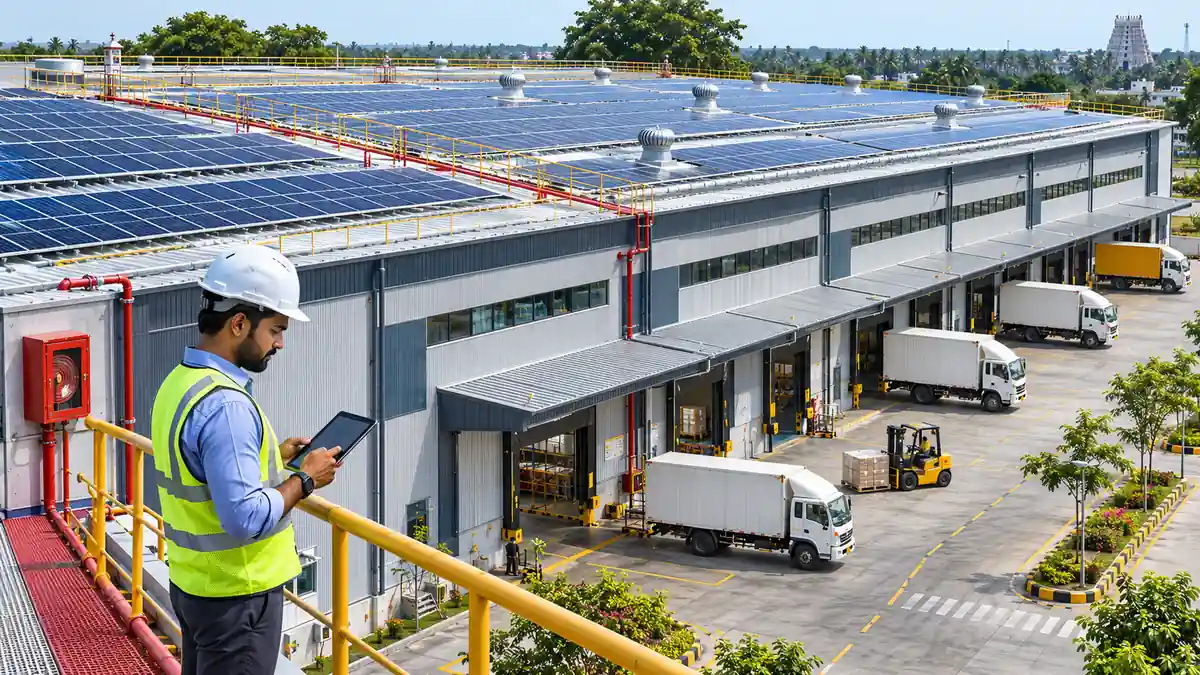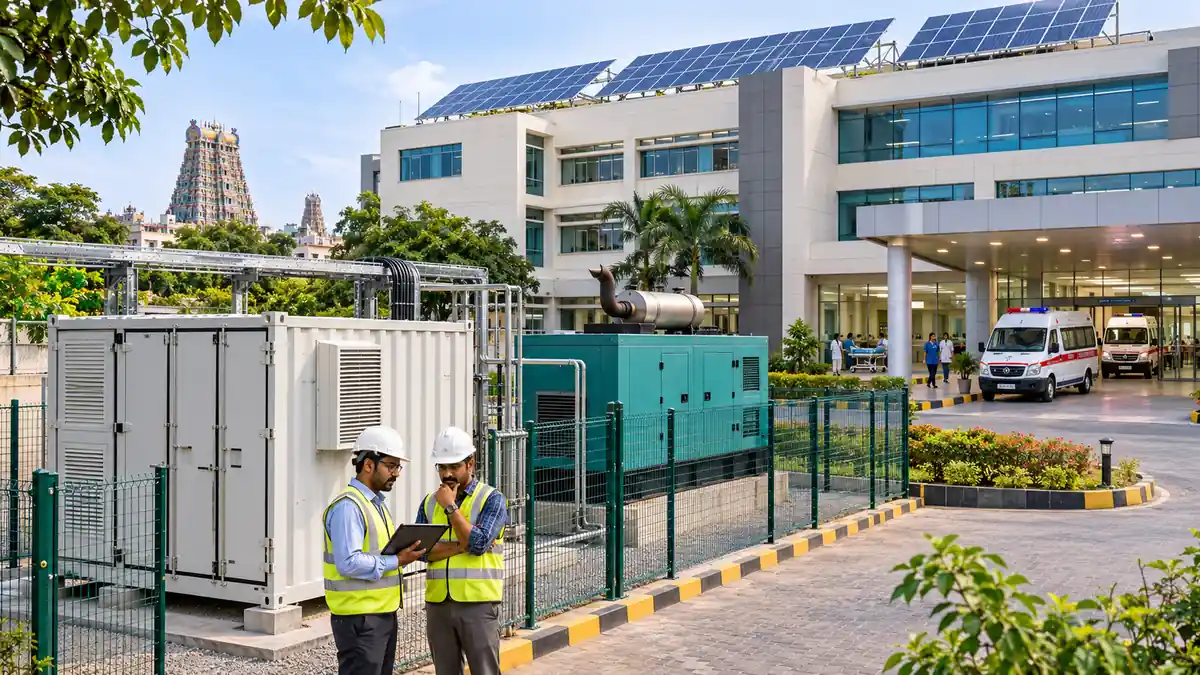
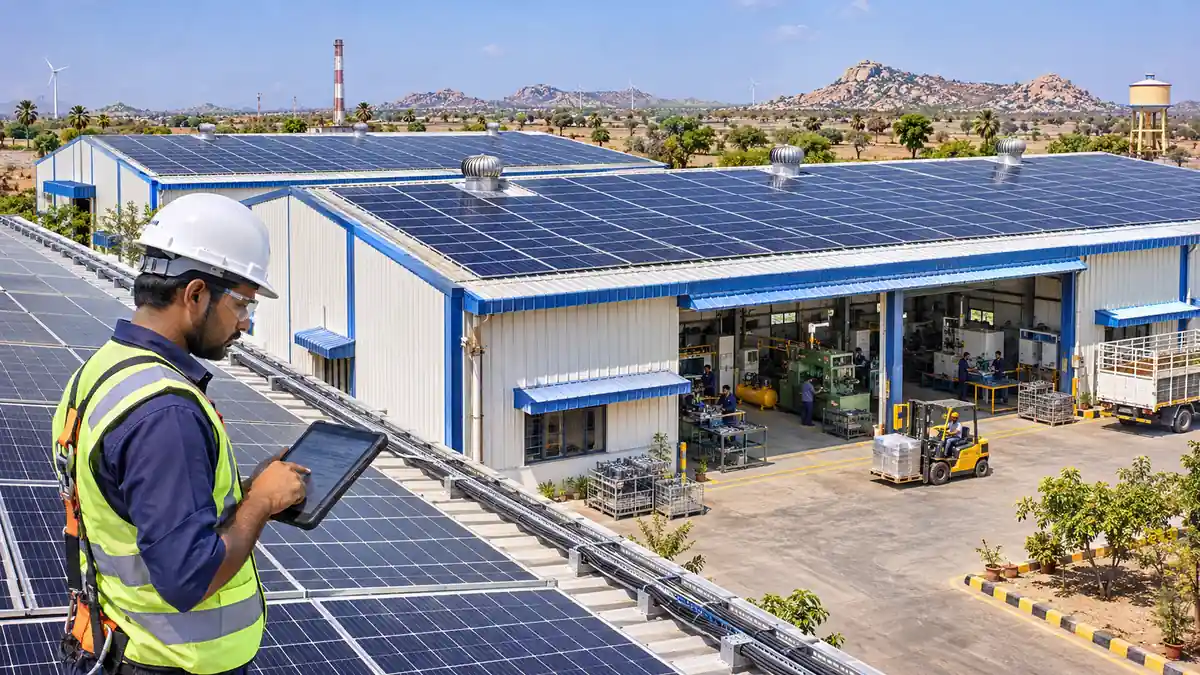
Kovilpatti’s industrial and MSME facilities often have two useful conditions for rooftop solar: sizeable shed roofs and electricity use during working hours. Those conditions do not guarantee a good project. The system must still match the factory’s load curve, sanctioned electrical capacity, roof life, production schedule and financial objective.
A proposal based only on roof area can be oversized. A proposal based only on monthly units can miss demand peaks, night shifts and shutdown periods. The best starting point is a joint energy and site audit.
Viryasys Technologies provides local feasibility and EPC support through its solar company in Kovilpatti and wider engineering support from the Chennai solar EPC hub.
Direct Answer: Is Industrial Rooftop Solar Suitable for a Kovilpatti Factory?
It can be suitable when the factory has dependable daytime demand, a structurally sound and largely shadow-free roof, an electrical system that can accept the proposed capacity and a plan to consume most generation on site.
The business case should be calculated from measured or interval consumption. It should not assume that every generated unit offsets the highest tariff or that solar will eliminate all demand charges. A documented proposal will show generation, self-consumption, export, losses, operating cost and a sensitivity range.
What Determines the Right Solar Capacity?
The practical system size is usually constrained by four factors.
Daytime load
Study at least 12 months of bills and, where possible, 15-minute or 30-minute interval data. Identify the minimum, average and peak daytime kW for normal production days, weekends and shutdowns.
Electrical approvals and connection limits
Review sanctioned load or contracted demand, transformer capacity, metering category, protection and the current TNPDCL/TNERC framework. Do not assume that capacity can be selected independently of the approved connection.
Usable roof area
Subtract setbacks, shade zones, fragile sheets, vents, skylights, fire paths, drainage lines and maintenance access. A module-only drawing that fills every visible sheet is not a construction-ready layout.
Self-consumption
Energy used behind the meter normally has a different value from exported surplus. Size the array around consumption during solar hours unless a specific export, open-access or storage case has been validated.
The Viryasys guide to calculating solar system size explains the core consumption method; industrial sites should extend it with interval data and demand analysis.
LT and HT Factories: Why the Bill Structure Matters
LT industrial consumers
For an LT connection, solar may reduce grid energy purchases during production hours. The model must use the applicable tariff components and any current network, metering or settlement charges.
HT industrial consumers
HT bills may include demand charges, energy charges, power-factor effects and time-related components. Rooftop solar reduces daytime imported kWh, but the month’s recorded maximum demand could occur during a cloudy interval, process start-up or evening shift. Do not promise a full demand-charge reduction without interval modelling.
Multiple meters or buildings
If a site has more than one service connection, determine which loads and roofs can legally and technically be connected. Generation on one meter does not automatically offset another meter.
A Practical Industrial Sizing Workflow
- Collect 12 bills and interval data.
- Map production shifts, holidays and planned expansion.
- Record major motors, compressors, ovens, pumps, HVAC and utilities.
- Survey roof dimensions, condition, access and shade.
- Check the transformer, panels, protection and earthing.
- Simulate monthly and hourly solar generation.
- Estimate self-consumed and exported energy separately.
- Compare capacity options instead of presenting one unexplained number.
For example, a factory may compare 100 kW, 150 kW and 200 kW alternatives. The largest option may generate the most units, but a smaller one may deliver a better self-consumption ratio and payback if weekend or seasonal demand is low.
Roof Engineering in Kovilpatti Conditions
Wind and structural checks
The mounting design must consider site wind conditions, roof height, edge zones, sheet and purlin strength and the building’s remaining life. A structural professional should review older or modified sheds.
Heat, dust and ventilation
High module temperature can reduce instantaneous output, while dust increases soiling losses. Maintain adequate rear ventilation, design safe cleaning access and use performance monitoring to set the cleaning schedule.
Corrosion and fasteners
Material selection should reflect the site environment and existing roof. Poor fasteners or incompatible metals can create leaks and long-term corrosion issues.
Production continuity
Plan lifting, roof work, cable routing, shutdowns and switchboard connection around production. Document which activities require isolation and who authorises them.
The solar installation process guide helps buyers understand what should happen before, during and after construction.
What Does Industrial Rooftop Solar Cost?
System cost varies with capacity, equipment and site scope. Compare quotations on the same boundary:
- Modules, inverters and mounting structure.
- DC and AC cabling.
- LT/HT panels, transformer interface and protection.
- Earthing and lightning protection.
- Walkways, lifelines and roof access.
- Structural strengthening or roof replacement.
- Monitoring and communication.
- Design, approvals, testing and commissioning.
- Warranty administration and O&M.
- Taxes, exclusions and contingencies.
Use current project quotations for the final number. Published market ranges can be useful for screening but cannot account for a factory’s roof, electrical upgrades or shutdown constraints.
Generation and Savings Calculation
Annual generation = Installed capacity (kW) × site-specific annual yield (kWh/kW).
Then split generation:
Self-consumed units = Generation used by the factory at the same time.
Exported units = Generation not consumed on site and sent through the approved arrangement.
Annual net benefit = Self-consumed units × avoided applicable energy cost + export value − annual O&M and recurring charges.
Simple payback = Net investment ÷ annual net benefit.
Run at least three cases:
- Expected generation and self-consumption.
- Lower generation or production utilisation.
- Higher production with future load growth.
Include module degradation and major equipment replacement assumptions in a longer-term cash-flow model.
CAPEX, Loan or PPA?
CAPEX purchase
The factory owns the asset and retains the energy savings, while funding the initial investment and long-term maintenance.
Financed purchase
A loan can spread the investment, but interest, security, repayment schedule and project cash flow need review.
Solar PPA
Under a suitable PPA, another party may invest and sell solar energy under a long-term contract. Buyers should compare tariff escalation, minimum offtake, performance responsibility, roof access, early termination and end-of-term options. Read the Viryasys solar PPA guide before evaluating offers.
When Should a Factory Add BESS?
BESS is not required merely because a factory installs rooftop solar below the applicable policy threshold. Evaluate it for a defined use case such as peak shaving, backup of selected loads, DG reduction or shifting excess solar.
Size BESS power in kW from the load or peak to be served, and energy in kWh from the required duration. Review How BESS Works with Solar for the essential components and limitations.
Factory Buyer Checklist
- Twelve months of bills and interval data reviewed.
- Production shifts and shutdowns mapped.
- Self-consumption calculated hourly or sub-hourly.
- Roof condition and structure checked.
- Electrical single-line diagram updated.
- Protection, earthing and lightning scope defined.
- Layout preserves fire and maintenance access.
- Current metering and settlement rules confirmed.
- Yield and loss assumptions disclosed.
- Monitoring KPIs and response times agreed.
- Warranty responsibilities and exclusions recorded.
- CAPEX, financing and PPA compared on like-for-like terms.
Conclusion
Industrial rooftop solar in Kovilpatti can be a strong cost-control investment when it is built around the factory’s real operating data. The reliable route is to match capacity to daytime consumption, verify the roof and electrical system, price the full EPC scope and calculate payback from self-consumed and exported energy separately.
Factory owners can share bills, load data and roof details with the Viryasys solar company in Kovilpatti for a project-specific feasibility review.