The quality of a rooftop solar project depends on far more than the brand name printed on the panels. Site assessment, structural planning, electrical design, equipment selection, workmanship, grid coordination and long-term support all influence how safely and consistently the system performs.
This makes the installation company one of the most important project decisions. A quotation that looks inexpensive can become costly if it hides lower specifications, unrealistic generation estimates, excluded approval work or unclear warranty responsibility.
How Should You Choose a Solar Installer in Chennai?
Choose a solar installer by comparing technical design, verifiable experience, exact equipment models, safety standards, project scope, generation assumptions, TNPDCL support, warranties, monitoring access and after-sales service. Ask every shortlisted company the same questions and insist that important commitments appear in the written proposal.
Do not select an installer only because it offers the lowest price, the highest savings claim or the largest panel capacity. The strongest proposal explains how the system was sized, who is responsible for every stage and what happens if actual performance or service falls short.
1. Check Experience with Your Type of Property
A company experienced mainly in small residential systems may not automatically be suitable for a factory, hospital, school or large commercial roof. Ask for completed projects that resemble your proposed system in capacity, roof type, electrical connection and operating requirements.
Request project photographs, system sizes, commissioning details and references that can be verified. Experience should be relevant, not just a headline number of installations.
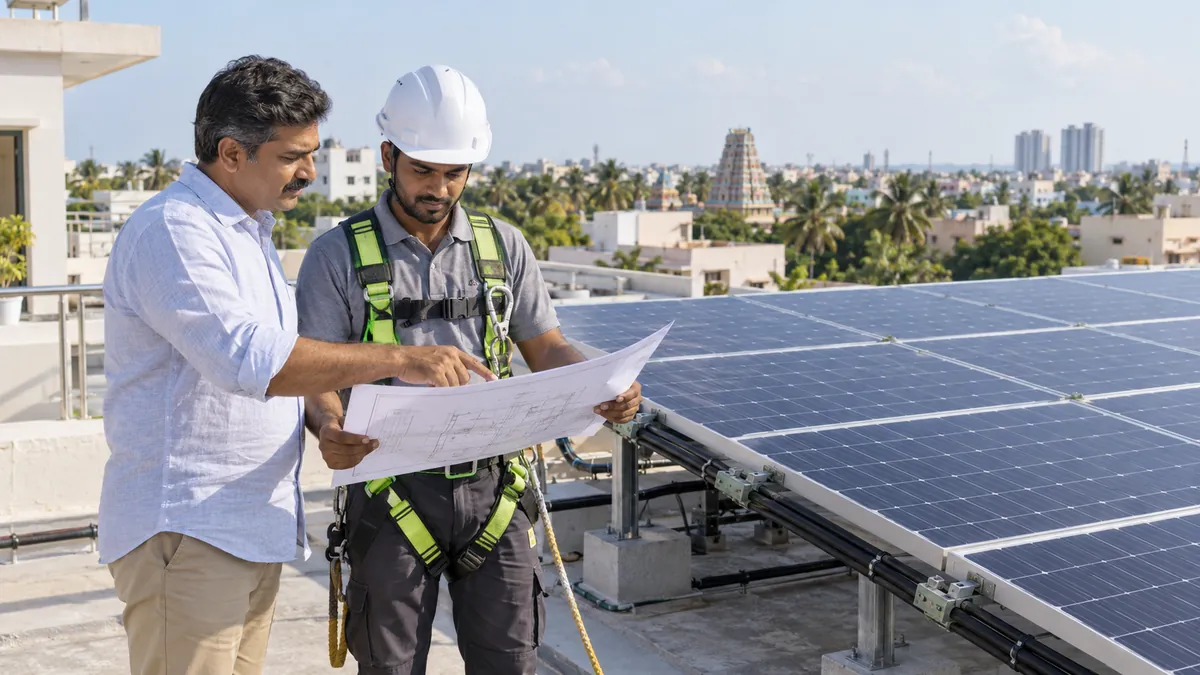
2. Confirm Who Will Design and Install the System
Some companies sell the project but outsource engineering or installation. Outsourcing is not automatically a problem, but responsibility must be clear.
Ask:
- Who conducts the site survey?
- Who signs off the electrical and structural design?
- Who supervises the installation team?
- Which company handles testing and commissioning?
- Who remains accountable for workmanship after handover?
The agreement should identify the contracting entity and the party responsible for each stage.
3. Demand a Proper Site Survey Before Final Pricing
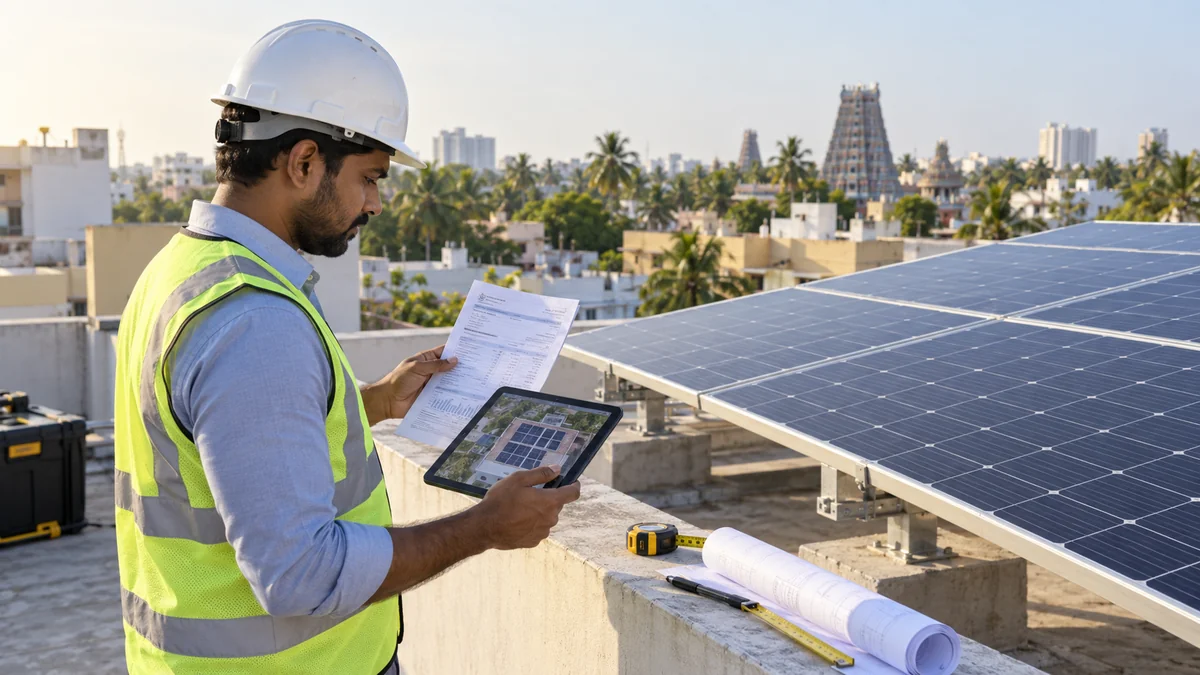
A serious proposal should not be based only on a bill photograph and rooftop area shared on WhatsApp. The survey should evaluate usable roof space, shadows, roof condition, structure, cable routes, inverter location, earthing, lightning protection, meter position and safe access.
For commercial and industrial sites, the assessment should also consider maximum demand, load pattern, transformer and panel capacity, shutdown requirements, fire access and future expansion.
4. Ask How the Solar-System Size Was Calculated
The proposed capacity should be supported by 12 months of electricity consumption, daytime usage, available roof area, site yield and applicable connection limits.
Ask for the calculation in writing. The guide on calculating the right solar system size explains why monthly consumption alone is not enough. A larger system is not always better if most energy is exported under unfavourable assumptions or if the roof layout creates avoidable shade.
5. Compare Exact Panel and Inverter Models
A quotation that lists only the manufacturer name is incomplete. Ask for:
- Exact module model number and wattage
- Cell technology and module construction
- Product and performance warranty
- Temperature coefficient
- Inverter make, model, rating and MPPT configuration
- Monitoring platform and communication equipment
- Protection devices, cable specifications and mounting material
Use the existing guide on choosing the right solar panel to compare efficiency, durability and lifetime performance rather than brand popularity alone.
6. Verify DCR and ALMM Requirements
DCR and ALMM are not interchangeable labels. Their applicability depends on the project, scheme and equipment.
For a residential project claiming PM Surya Ghar assistance, confirm whether the proposed equipment satisfies the applicable domestic-content and approved-model requirements. Match the exact module and manufacturer details rather than accepting a general statement that the brand is approved.
Before signing, review the DCR versus non-DCR solar panel guide and the ALMM List-II explainer.
7. Test the Generation and Savings Assumptions
Ask the installer to show:
- Expected monthly and annual generation
- Weather and irradiation data used
- Assumed soiling, temperature and electrical losses
- Shade analysis
- Module degradation assumption
- Expected self-consumption and export
- Electricity tariff and escalation assumptions
Generation is an estimate, not a guaranteed constant. Be cautious when a proposal presents one daily production number for every month or promises a fixed bill reduction without analysing how and when electricity is used.
8. Review the Complete Scope and Exclusions
Two quotations with the same capacity may include very different work. Compare the complete bill of quantities and clarify whether the price includes:
- Site survey and engineering
- Mounting structure and civil work
- AC and DC cables
- Earthing and lightning protection
- Distribution-board modifications
- Net meter and approval assistance
- Testing and commissioning
- Monitoring setup
- Scaffolding or lifting equipment
- Taxes, transport and insurance
- Operation and maintenance support
Ask for exclusions in a separate written section. This prevents unexpected charges after installation begins.
9. Check Safety and Engineering Standards
Solar modules remain electrically active in daylight. Poor connectors, undersized cables, weak earthing, unsuitable isolators or careless routing can create fire and shock risks.
The proposal should identify protection devices, cable and connector standards, earthing arrangement, surge protection, inverter isolation and shutdown procedure. For larger systems, ask for drawings, testing records and the approvals applicable to the project.
Never accept a design that compromises roof access, drainage, parapet clearance or maintenance safety simply to fit more panels.
10. Clarify TNPDCL and Net-Metering Responsibility
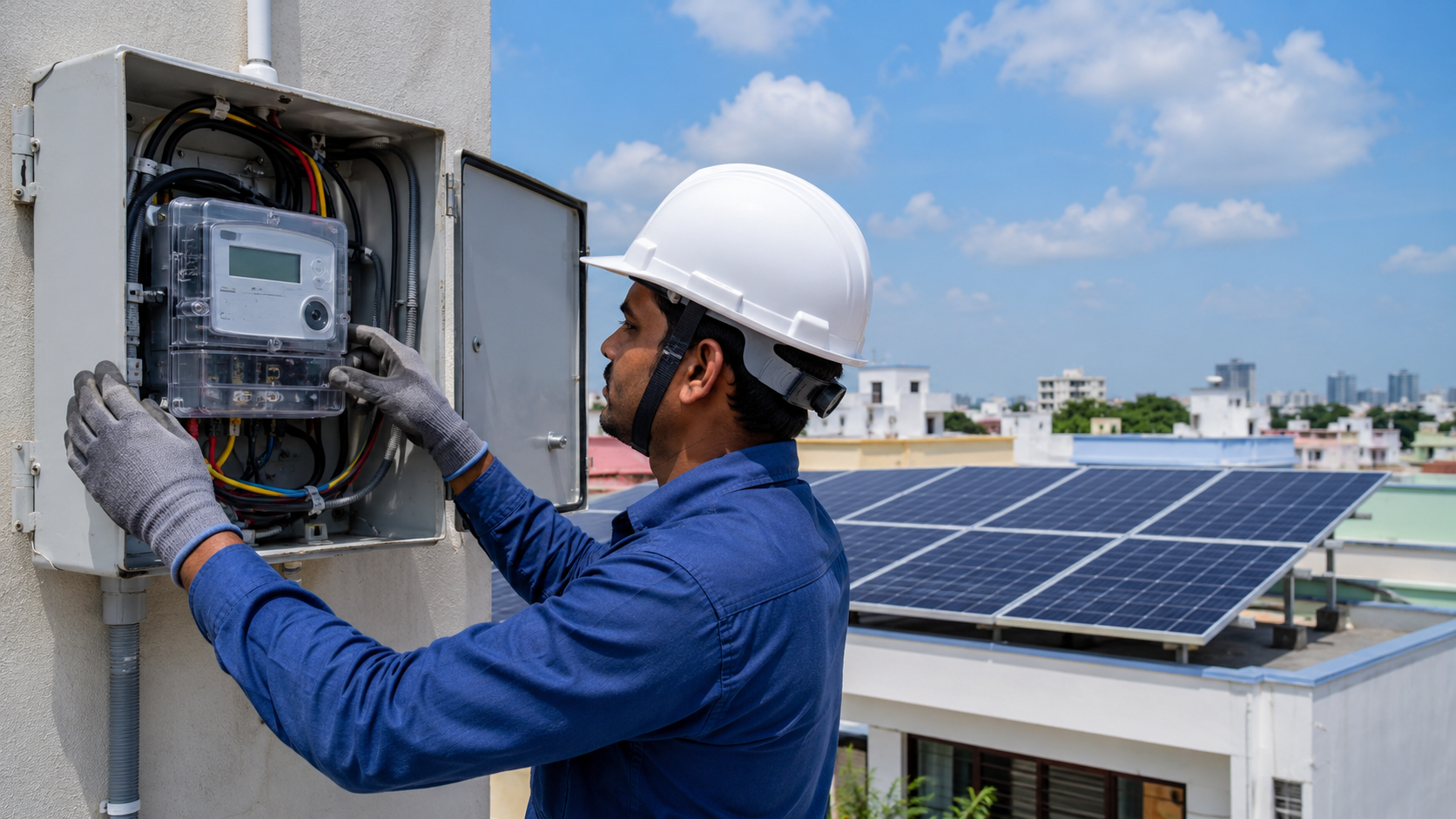
Ask who will manage the application, documentation, inspection, meter coordination and commissioning steps. The installer should explain which tasks are included and which depend on the consumer or distribution company.
The process and billing arrangement should match the actual consumer category and proposed system. Read the Tamil Nadu solar net-metering guide before accepting claims about exported energy, bill adjustment or approval time.
11. Separate Every Warranty
A statement such as “25-year warranty” may refer only to the module performance warranty. Ask for separate documents covering:
- Solar-panel product warranty
- Solar-panel performance warranty
- Inverter warranty
- Mounting-structure warranty
- Workmanship warranty
- Monitoring equipment
- Battery warranty, when applicable
Clarify who processes claims, whether removal and reinstallation labour is covered, or charged, and how quickly local service is normally arranged. A manufacturer warranty is less useful when no party accepts responsibility for diagnosis and coordination.
12. Evaluate Monitoring and After-Sales Support
The owner should receive access to the inverter or energy-monitoring platform. Ask who configures alerts, how faults are reported, what the response process is and whether maintenance visits are included.
Also confirm whether the company maintains systems installed by its own team, offers preventive maintenance and provides a clear escalation contact. Long-term support should be discussed before payment, not after the first inverter alert.
Red Flags in a Solar Quotation
- Capacity recommended without inspecting bills or roof conditions
- Only brand names listed, without model numbers
- Guaranteed generation without disclosed assumptions
- Pressure to pay before the final design is shared
- “Government approved” claims without exact verification
- No written exclusions or bill of quantities
- One warranty period presented for every component
- No explanation of earthing, surge protection or isolation
- No clarity on TNPDCL responsibilities
- No owner access to monitoring data
- Savings based on exporting every surplus unit at the retail tariff
- Testimonials or project claims that cannot be verified
A Simple Method to Compare Three Quotations
Create one comparison sheet and enter the same fields for every bidder: system capacity, panel model, inverter model, expected annual generation, usable roof area, structure specification, protection scope, approvals, total price, exclusions, warranties, maintenance and service response.
Do not compare only cost per kW. A lower price may reflect different equipment, thinner structures, smaller cables, limited civil work or excluded application support. Compare like with like before negotiating.
Why Local Execution Capability Matters in Chennai
Chennai projects may face heat, coastal humidity, dust, heavy seasonal rain, dense urban roofs and access limitations. These conditions do not justify generic fear-based claims, but they do make site-specific material selection, drainage, corrosion protection, ventilation and maintenance planning important.
A dependable Solar Company in Chennai should explain how its design responds to the actual property rather than presenting the same layout and equipment package for every customer.
Conclusion
Choosing a solar installer is an engineering and accountability decision, not simply a price comparison. Verify relevant experience, design logic, component models, safety, approvals, warranties and after-sales responsibility before signing.
The right company will welcome detailed questions and provide written evidence. When proposals are compared on the same technical and commercial fields, it becomes easier to identify genuine value and avoid expensive omissions.