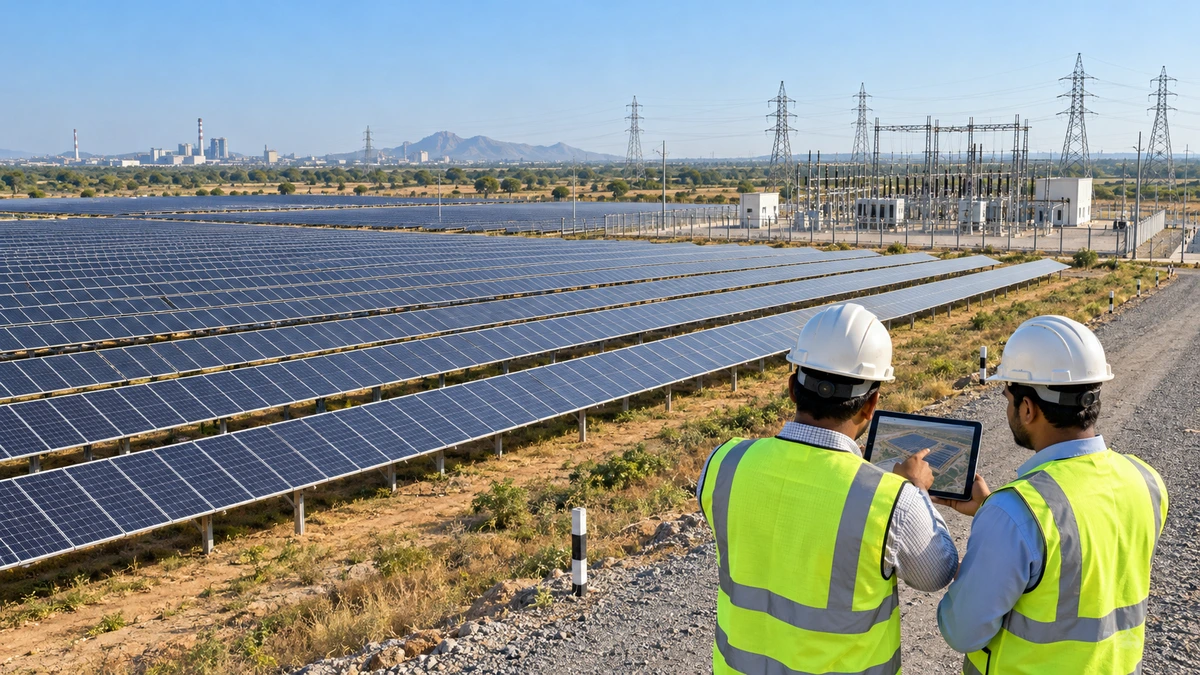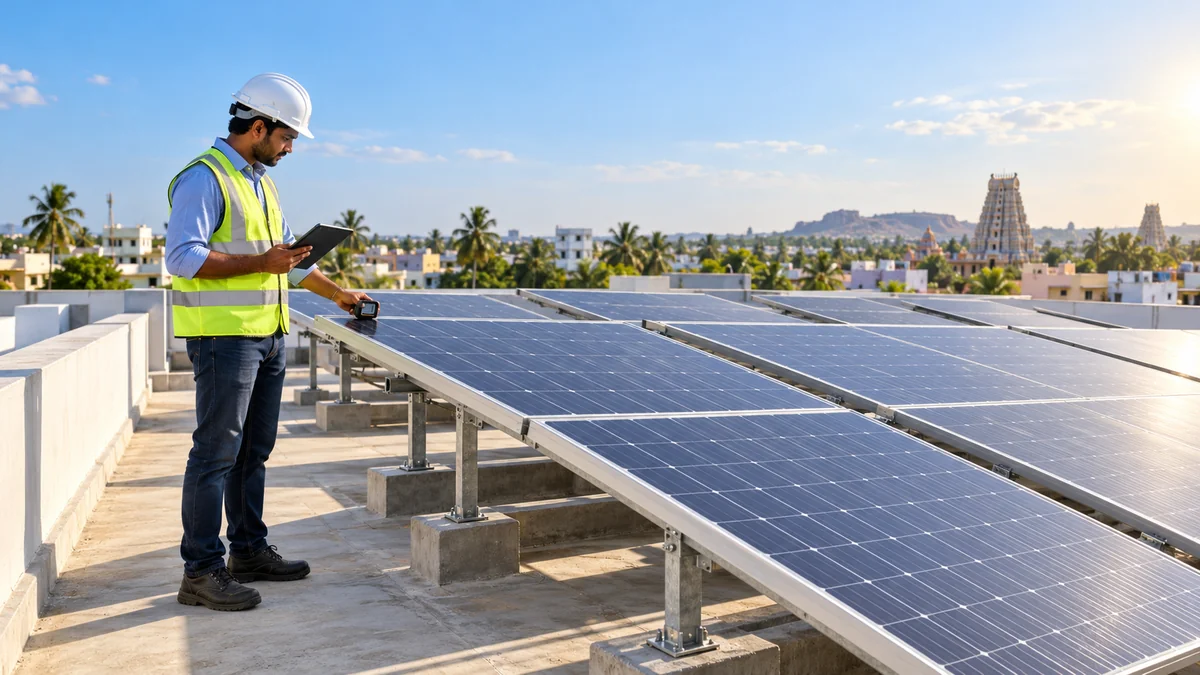
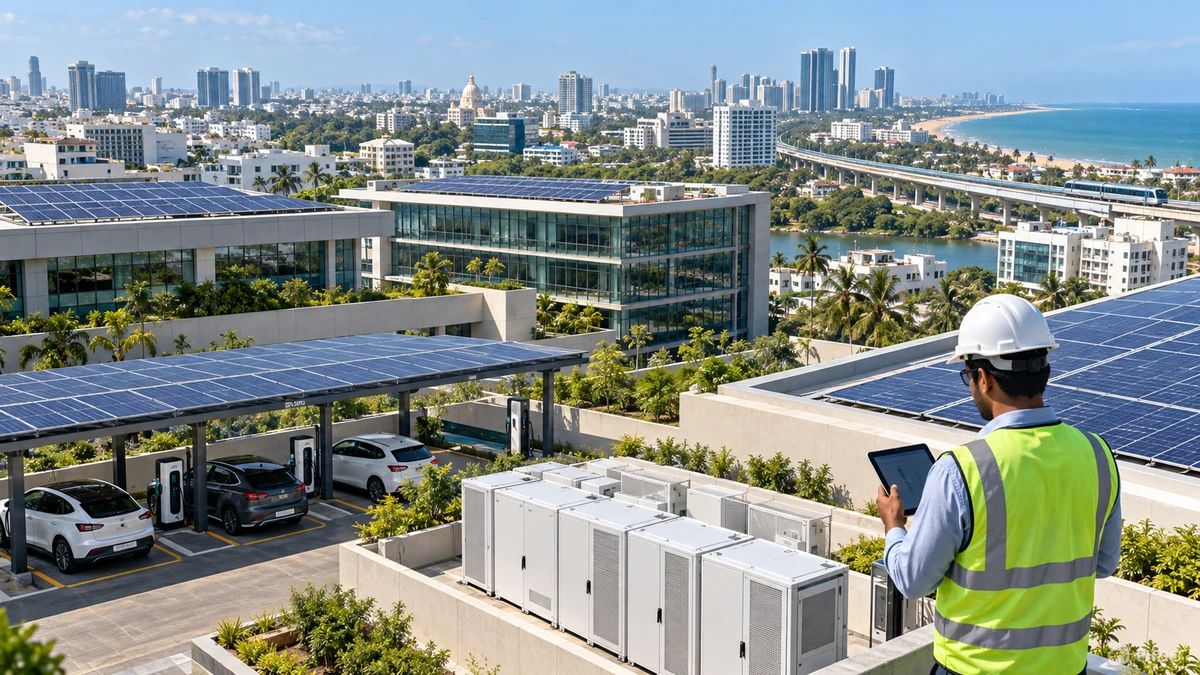
Over the next five years, solar will evolve from a stand-alone generation asset into a more integrated energy system. Modules will continue to improve, but the biggest practical changes will come from solar working with battery storage, smart inverters, energy-management software, electric vehicles, flexible demand and stronger grid planning.
For Chennai homes and businesses, this does not mean waiting for a perfect future technology. It means installing systems that perform well today while keeping monitoring, electrical design, space and controls ready for future expansion.
What Will Change by 2031?
By 2031, solar systems are likely to use more efficient modules, produce more energy from limited roof or land area, include better diagnostics and increasingly operate with battery energy storage. Commercial buyers will evaluate hourly energy value, reliability and carbon performance, not only annual generation. Open-access, captive and PPA structures may expand, while grid constraints, domestic manufacturing rules, recycling and cybersecurity receive greater attention.
Some developments, such as n-type modules, storage and digital O&M, are already scaling. Others, such as perovskite-silicon tandem modules and long-duration storage, remain a watch list rather than a guaranteed purchasing plan.
A Confidence-Based View of Solar's Next Five Years
High confidence — already scaling
- Higher-efficiency commercial modules.
- Greater use of battery storage for selected applications.
- Smart inverter and energy-management integration.
- Remote diagnostics and data-led O&M.
- More attention to domestic supply chains and compliance.
- Commercial procurement through rooftop, captive and open-access models.
Medium confidence — likely to become broader
- Solar-plus-storage for more commercial and industrial sites.
- EV charging coordinated with onsite generation.
- Better forecasting and time-based control of flexible loads.
- More formal recycling, traceability and end-of-life planning.
- Hybrid procurement combining rooftop and remote renewable power.
Watch list — promising but not guaranteed at scale by 2031
- Commercial perovskite-silicon tandem modules across mainstream projects.
- Long-duration storage for routine behind-the-meter applications.
- Large networks of customer assets operating as virtual power plants.
- Widespread vehicle-to-building or vehicle-to-grid operation.
This classification protects buyers from treating laboratory records or pilot projects as bankable products.
1. Modules Will Produce More Power from the Same Area
Module manufacturers are improving cell architecture, contact design, wafer use, encapsulation and bifacial performance. Higher-wattage modules can help constrained rooftops install more capacity, but wattage alone does not determine project value.
Buyers should compare:
- Module efficiency and physical dimensions.
- Temperature coefficient.
- Product and performance warranties.
- Mechanical load and fire classification.
- Degradation assumptions.
- Manufacturer and model compliance.
- Local service and warranty process.
- Compatibility with the selected inverter and mounting system.
N-type technologies are already common in the market and are likely to gain further share. However, a mature, correctly installed module can outperform a theoretically superior product paired with poor layout, weak connectors or inadequate O&M. The solar-panel selection guide gives a practical evaluation framework.
2. Solar and Battery Energy Storage Will Be Designed Together
Battery storage will become more important as solar penetration grows and consumers place greater value on resilience, demand management and time-shifting. A battery energy storage system (BESS) can store selected energy and discharge it later under a defined control strategy.
Potential use cases include:
- Backup for critical loads.
- Solar self-consumption after sunset.
- Peak-demand management.
- Smoothing rapid changes in site demand or generation.
- Supporting EV charging or operational continuity.
- Participating in future grid-service arrangements where permitted.
One battery cannot maximize every objective simultaneously. Backup reserve competes with daily cycling, and peak shaving needs different control logic from outage protection. Capacity, power rating, usable depth, response time and backup circuits must follow the use case.
Viryasys' battery energy storage systems page explains the core technology. Buyers should also compare on-grid and hybrid solar architectures before assuming storage can be added to any existing inverter without redesign.
3. Energy Management Will Matter More Than Panel Count
A future-ready solar project will coordinate generation, storage, loads and grid exchange. An energy-management system can use meter data, forecasts, tariff periods, battery state of charge and operating priorities to determine when assets should run.
For example, a commercial site may:
- Serve current daytime load from solar.
- Charge the battery only when there is valuable surplus.
- Reserve enough energy for critical backup.
- Discharge during a defined demand peak.
- Delay flexible loads when grid conditions or costs are unfavourable.
The value comes from the control policy and data quality, not from displaying more graphs. Owners should require data access, documented control logic, cybersecurity responsibility and a manual fallback process.
4. Digital O&M Will Move from Monitoring to Diagnosis
Many current portals show total daily energy and basic alarms. Over the next five years, analytics should become better at identifying underperforming strings, abnormal temperature, inverter patterns, soiling and recurring grid events.
Useful digital O&M features include:
- Weather-normalized performance tracking.
- String or MPPT comparison.
- Alarm prioritization by energy and safety impact.
- Automated work-order creation.
- Thermography and drone inspection for suitable plants.
- Predictive replacement planning.
- Documented fault history and resolution time.
Artificial intelligence can help prioritize anomalies, but it cannot replace accurate sensors, clean data or a technician's electrical tests. Owners need clear thresholds and accountable response, not only an “AI-enabled” label.
The article on why solar output falls provides the diagnostic foundation that future analytics will automate more effectively.
5. Solar Design Will Follow Hourly Value, Not Only Annual Units
Historically, many proposals focused on annual kilowatt-hours. As solar capacity grows, the timing of production becomes more important.
Designers will increasingly study:
- Fifteen-minute or hourly load profiles.
- Morning, afternoon and evening demand.
- Grid export limits and settlement.
- Demand charges and peak periods.
- Battery dispatch opportunities.
- Planned EV charging.
- Seasonal shutdowns and production cycles.
This can change layout decisions. A west-biased array may be valuable for afternoon demand even if true south produces slightly more annual energy. An east-west roof may support a broader generation window and higher installed capacity. Read the Tamil Nadu solar-panel angle and direction guide for these trade-offs.
6. EV Charging and Solar Carports Will Converge
Electric vehicles add flexible demand that can be scheduled around solar generation. Offices, factories, campuses, apartments and fleets may combine charging with rooftop or carport solar.
A coordinated system can:
- Charge vehicles when onsite solar is abundant.
- Limit charging during the facility's demand peak.
- Prioritize fleet departure requirements.
- Use BESS to reduce rapid grid demand changes.
- Allocate energy and cost by user or vehicle.
The electrical design must account for simultaneous load, transformer capacity, protection, metering, fire safety, traffic flow and future charger expansion. Vehicle-to-building concepts are promising, but mainstream use will depend on compatible vehicles, chargers, standards, warranties and regulations.
7. Open-Access and PPA Procurement Will Become More Data-Driven
Large consumers can combine onsite solar with remote renewable procurement. Instead of choosing a plant size from annual consumption, buyers will model time-block demand, open-access settlement, banking, curtailment and contract exposure.
Future procurement may blend:
- Owned rooftop solar.
- Onsite PPA capacity.
- Captive or group-captive generation.
- Third-party renewable supply.
- Battery storage.
- Utility power for balance and backup.
The commercial model should calculate delivered cost and downside risk. See the industrial rooftop solar guide for onsite planning, followed by Viryasys' PPA guide and ground-mounted open-access guide.
8. Grid Integration Will Become a Central Constraint
Adding solar generation is only part of the transition. Networks need transmission capacity, reactive-power management, forecasting, protection coordination and flexible resources to handle changing power flows.
At project level, expect greater attention to:
- Smart-inverter functions.
- Export control.
- Communication with meters and plant controllers.
- Forecasting and scheduling for relevant projects.
- Grid-code compliance.
- Curtailment and connection availability.
- Power quality and protection studies.
This is one reason battery storage and flexible demand matter. They can help move or manage energy, although they do not eliminate the need for adequate network infrastructure.
9. Domestic Manufacturing and Compliance Will Shape Equipment Choice
India's solar supply chain is expanding, while procurement rules for eligible projects continue to evolve. Approved module and cell lists, domestic-content conditions and scheme-specific requirements affect which products can be used.
By 2031, buyers are likely to demand better traceability of cells, modules, warranties and serial-level documentation. Procurement teams should verify current rules on the order date rather than relying on an older proposal.
The ALMM List-II guide and DCR versus non-DCR comparison explain why these are separate compliance concepts.
10. Recycling and End-of-Life Planning Will Become a Purchase Question
Solar modules and batteries have long service lives, but every project eventually faces replacement, repowering or decommissioning. Future procurement will need clearer answers on:
- Product traceability.
- Repair and reuse options.
- Collection and transport.
- Authorized recycling routes.
- Data removal from smart devices.
- Decommissioning cost and responsibility.
- Recovery of land or roof condition.
For batteries, chemistry, state of health, fire safety and transport require special management. A low purchase price that ignores end-of-life responsibility is not a complete lifecycle cost.
11. New Cell Technologies Will Advance, but Buyers Should Stay Bankable
Perovskite-silicon tandem cells have demonstrated exciting efficiency potential by capturing a broader part of the solar spectrum. Commercial progress could raise module efficiency beyond today's mainstream products.
However, five-year project decisions must consider:
- Proven outdoor durability.
- Scalable manufacturing yield.
- Encapsulation and moisture resistance.
- Product certification.
- Warranty strength.
- Bankability and replacement availability.
- Cost at commercial volume.
Businesses should monitor tandem technology without delaying a viable current project solely for an uncertain future product.
12. Resilience and Cybersecurity Will Become Design Requirements
Connected inverters, BESS controllers, meters and energy-management platforms expand the system's digital surface. Projects will need stronger access control, software-update policies, network segmentation, event logging and responsibility for remote support.
At the same time, resilience expectations must be realistic. A grid-connected solar plant alone normally shuts down during an outage. Backup requires an appropriately designed inverter, storage, protection and prioritized circuits. The system should be tested under actual transition and load conditions.
What Should Chennai Buyers Do Now?
The following are no-regret actions even as technology changes.
Preserve expansion space
Reserve electrical-panel capacity, cable routes, safe roof or yard space and communication pathways where practical.
Own the operating data
Require access to meter, inverter, alarm and interval data in an exportable format.
Define the objective before the technology
Separate bill savings, backup, peak management, carbon reporting and EV charging. Each objective needs different sizing and controls.
Use modular architecture
Select compatible protection, switchgear and controls so future expansion can be engineered without replacing the entire system.
Document design assumptions
Keep the energy model, single-line diagram, string map, settings, warranties and commissioning results.
Evaluate lifecycle service
Installation quality, O&M response, spares and warranty support remain valuable even when module technology improves.
Viryasys Technologies can help homes and businesses plan a current, expandable solar system in Chennai based on site conditions and operating goals.
Should You Wait for Better Solar Technology?
Usually, the decision should be based on whether a project works with today's bankable technology, current consumption and acceptable risk. Module efficiency may improve, but waiting also postpones energy production and learning.
Consider waiting or redesigning when:
- The roof needs imminent replacement.
- The electrical connection or load is about to change materially.
- A planned expansion would make today's layout obsolete.
- Grid approval or property rights are unresolved.
- The business cannot support maintenance or contract obligations.
Do not wait merely because a laboratory technology may become commercial. Build an upgrade path instead.
Conclusion
Solar's next five years will be defined by integration. Better modules will matter, but storage, controls, grid capacity, digital O&M, flexible demand, procurement and lifecycle responsibility will determine how valuable the energy becomes.
The practical strategy for Chennai buyers is to use proven technology, preserve options and demand transparent data. Design today's solar system around actual loads and safety, then make it ready for storage, EV charging, enhanced controls and future expansion. That approach captures current value without betting the project on a prediction.