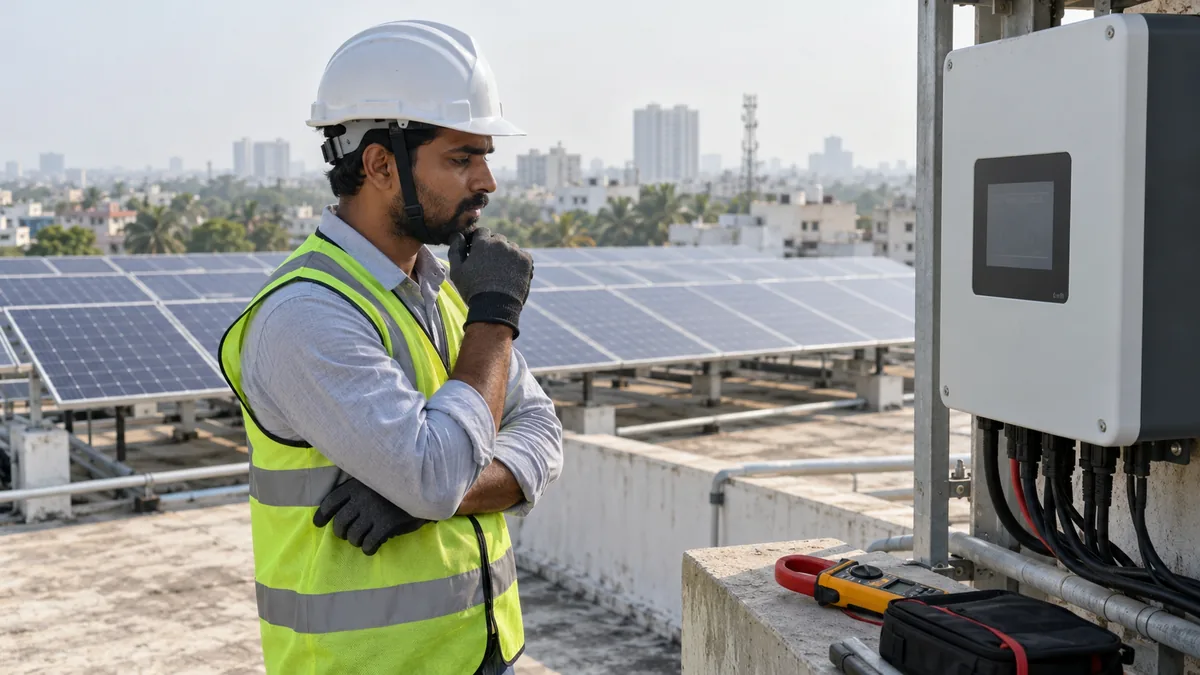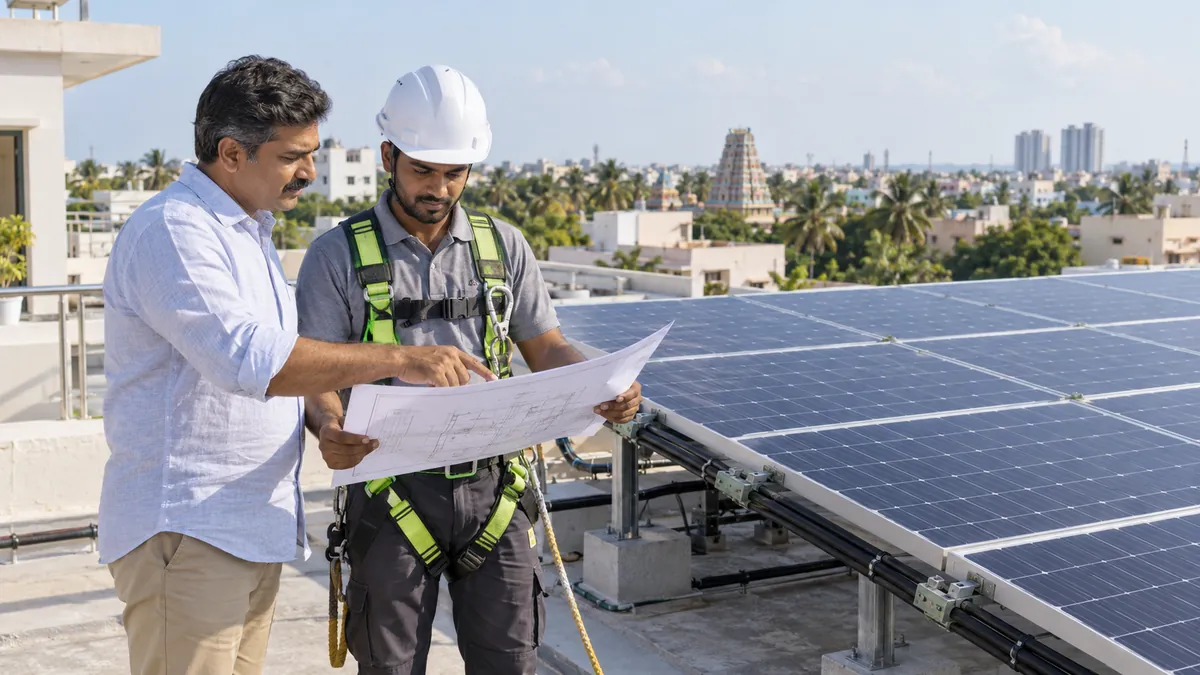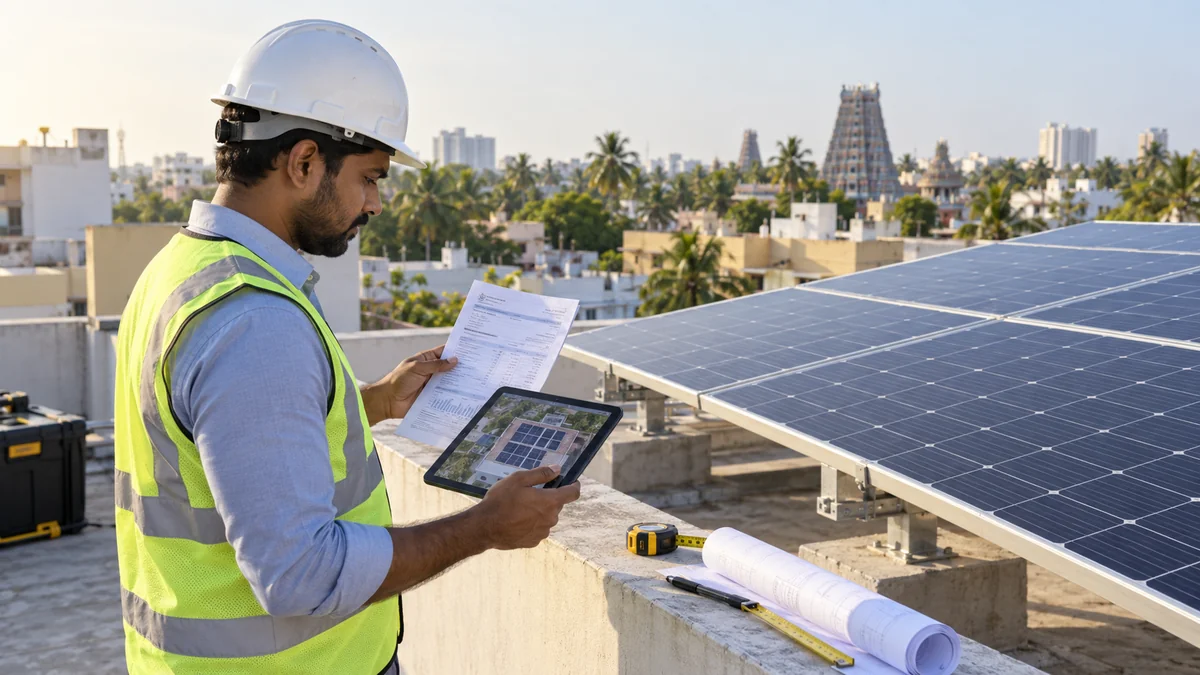
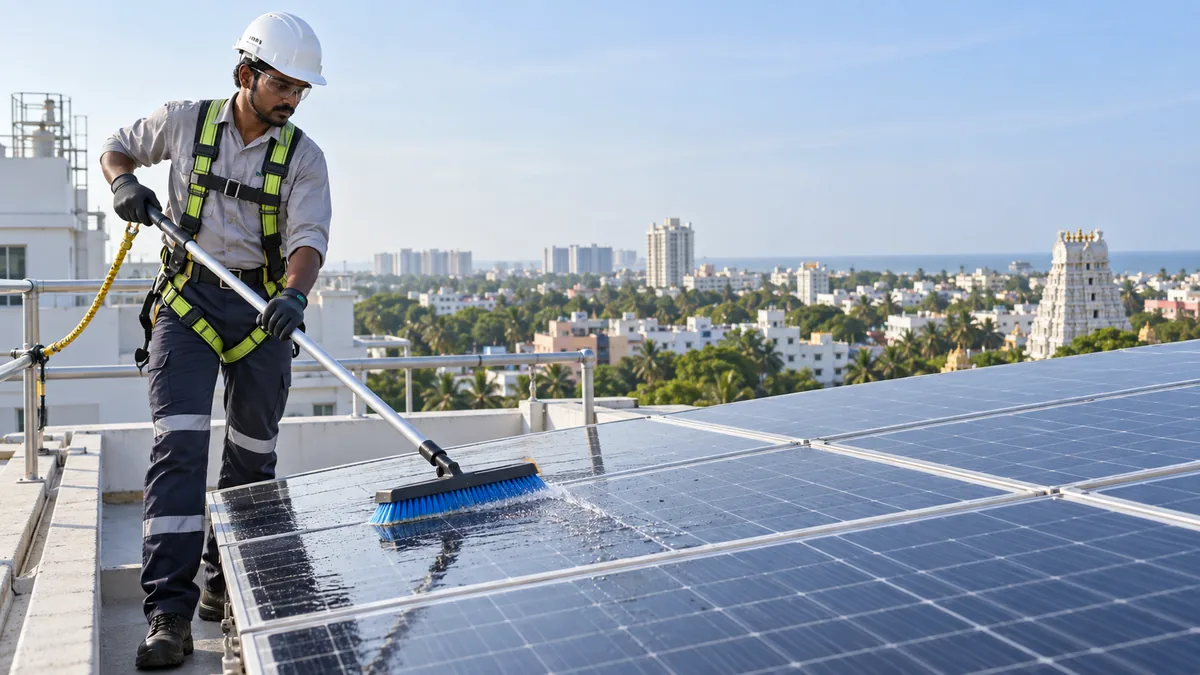
Solar panels have no fuel system or rapidly moving generation parts, but the complete rooftop plant still requires attention. Dust, bird droppings, blocked drainage, inverter alerts, loose connections, corrosion and changing shade can reduce output or create avoidable safety problems when they remain unnoticed.
Effective maintenance is not repeated washing alone. It combines performance monitoring, condition-based cleaning, safe visual inspection and periodic professional testing. The frequency should reflect the site rather than a generic calendar copied from another climate.
What Maintenance Does a Solar System Need?
A rooftop solar system needs regular generation monitoring, visual checks for dirt and damage, cleaning when soiling affects the panels, inverter and alert review, inspection of mounting and cable routes, and periodic testing of electrical protection and earthing by qualified personnel.
In Chennai, the schedule should consider local dust, nearby construction, birds, coastal exposure, roof access and seasonal rain. Owners can monitor output and perform safe ground-level observations. Electrical testing, roof work and fault repair should be handled by trained technicians.
Why Solar Maintenance Matters
Maintenance protects four parts of the investment:
- Energy generation and bill savings
- Electrical and structural safety
- Equipment life and warranty records
- Early detection of small faults before they cause extended downtime
A system can continue producing even when one string, sensor or communication device is not working correctly. Regular monitoring helps identify partial losses that are easy to miss on the electricity bill.
Solar Maintenance Is More Than Panel Cleaning
The visible modules receive most of the attention, but a rooftop plant also contains an inverter, cables, connectors, protection devices, earthing, mounting structures, meters and monitoring equipment. Battery-backed systems add battery modules, a battery management system, power-conversion equipment and thermal controls Owners comparing module specifications can also review how to choose a solar panel..
A complete maintenance plan should cover:
- Module glass and frames
- Mounting rails, clamps and fasteners
- DC cables and connectors
- AC cables and distribution panels
- DC and AC isolators
- Surge-protection devices
- Earthing system
- Inverter ventilation and fault history
- Generation and import-export meters
- Data logger, internet connection and monitoring portal
- Battery and energy-management components where installed
How Often Should Solar Panels Be Cleaned in Chennai?
There is no responsible fixed interval for every property. Cleaning frequency depends on visible soiling, output trend, rainfall, roof angle, traffic dust, construction activity, birds, trees and the water quality available for cleaning.
Use a condition-based approach:
- Check generation data at least monthly.
- Visually inspect panels from a safe location after dusty periods, storms or nearby construction.
- Clean when contamination is visible or performance data indicates a meaningful soiling pattern.
- Inspect more frequently at industrial, coastal, high-dust or bird-prone sites.
- Review the schedule after each season instead of repeating it indefinitely.
Rain can remove loose dust, but it may not clear bird droppings, oily deposits, leaf debris or mineral stains. Do not assume that every rainfall completes the cleaning process.
Safe Solar-Panel Cleaning Method
Follow the module manufacturer's maintenance instructions and the site's safety procedure. A general safe approach includes:
- Schedule cleaning during a cooler, low-irradiance part of the day.
- Follow the approved shutdown or isolation procedure when required.
- Use clean water suitable for the module surface.
- Use a soft, non-abrasive brush or approved cleaning tool.
- Remove loose dirt gently without scraping the glass.
- Allow water to drain without leaving heavy residue.
- Record the cleaning date and generation before and after.
Avoid:
- Walking or standing on modules
- Pressure washers directed at seals or connectors
- Abrasive pads or metal tools
- Harsh detergents and unapproved chemicals
- Cold water on very hot panels
- Unprotected work on wet or slippery roofs
- Touching cables, connectors or electrical enclosures
Roof height and access risk often make professional cleaning safer than owner maintenance.
Monthly Solar Maintenance Checklist
Most monthly checks can be completed without touching the electrical system.
- Review daily and monthly generation in the monitoring portal.
- Check whether data is complete or communication has stopped.
- Record recurring inverter warnings or grid faults.
- Compare output with the same season and similar weather.
- Look for new shade from trees, buildings or rooftop equipment.
- Observe panels for leaves, dirt, bird droppings or obvious damage.
- Check from ground level for loose visible cables or disturbed structures.
- Confirm that roof drainage and access paths are not blocked.
Investigate persistent patterns, not one cloudy day.
The guide on why a solar system is not producing enough power provides a safe diagnostic sequence.
Seasonal and Weather-Related Checks
Before the Monsoon
- Confirm roof drains and water paths are clear.
- Check cable entries, glands and enclosures for deterioration.
- Inspect structure and fasteners through qualified personnel.
- Review earthing and surge protection.
- Remove loose debris that could move during strong wind.
After Heavy Rain or Strong Wind
- Review monitoring for unexpected shutdowns.
- Visually check for shifted debris, damaged glass or disturbed cables.
- Look for water accumulation near electrical equipment.
- Arrange inspection when any damage or repeated insulation fault appears.
During Hot Months
- Keep inverter ventilation paths unobstructed.
- Review temperature or derating alerts.
- Do not block the airflow beneath modules.
- Compare midday performance with the equipment's operating conditions rather than its laboratory rating.
Annual Professional Solar Inspection
The exact interval depends on system size, environment, warranty and risk.
A professional inspection commonly considers:
- Module condition and hotspot indicators
- String current and voltage comparison
- Connector and cable condition
- Insulation resistance where appropriate
- Inverter fault history and operating data
- AC and DC protection devices
- Earthing continuity and resistance
- Surge-protection status
- Mounting torque, corrosion and roof interface
- Meter and monitoring accuracy
- Labels, access and shutdown information
- Battery health and thermal management when applicable
Testing should be performed with suitable instruments and safety procedures. The inspection report should record observations, measurements, photographs, corrective actions and unresolved risks.
How to Maintain Optimal Solar-System Efficiency
“Full efficiency” is not a constant operating condition. Panel output changes with sunlight and cell temperature, while every real system has conversion and wiring losses. The objective is to keep performance close to the correctly modelled expectation for the conditions.
To maintain optimal performance:
- Keep modules reasonably clean without over-cleaning.
- Prevent avoidable shade.
- Maintain rear ventilation and drainage.
- Respond to inverter and monitoring alerts promptly.
- Repair failed strings or communication devices after diagnosis.
- Keep electrical connections and protection systems in good condition.
- Compare longer-term trends instead of isolated days.
- Use professional tests when the data indicates a persistent loss.
The article on why solar panel efficiency drops separates reversible operating losses from natural module ageing.
Solar Inverter Maintenance
The inverter should be installed in the environment specified by its manufacturer, with adequate clearance and ventilation. Keep the surrounding area dry, accessible and free from stored materials that obstruct airflow.
Owners should record alerts and ensure the monitoring connection works. A technician should investigate recurring overheating, insulation, grid-voltage, fan or internal errors. Firmware and settings should be changed only through authorised procedures because inappropriate changes can affect safety, grid compliance and warranty.
Maintenance for Commercial and Industrial Solar
Larger systems require a more formal operation-and-maintenance plan because a small percentage loss can represent substantial energy and revenue.
The plan may include:
- Performance ratio and specific-yield tracking
- String-level monitoring
- Scheduled thermography
- Vegetation and shade management
- Spare-parts strategy
- Response-time and escalation targets
- Shutdown coordination
- Safety permits and lockout procedures
- Cleaning-water management
- Monthly exception reports
Maintenance should reflect production criticality, site safety and operational schedules rather than treating every visit as a standard cleaning exercise.
How Much Does Solar Maintenance Cost in Chennai?
There is no universal maintenance price. Cost depends on system capacity, number of panels, roof height and slope, access equipment, cleaning frequency, water requirements, monitoring scope, electrical testing, travel, response time and whether replacement parts are included.
Ask the provider to separate:
- Routine cleaning
- Preventive electrical inspection
- Monitoring and reporting
- Emergency call-outs
- Labour for warranty replacement
- Consumables and spare parts
- Thermography or specialised testing
An annual maintenance contract should define the number of visits, response commitment, exclusions and evidence provided after each visit.
Owner Tasks Versus Technician Tasks
Owners can safely review monitoring, keep inverter surroundings clear, maintain records and observe the roof from a safe location. They should not disconnect live DC connectors, open inverters, reset protection repeatedly, test insulation, walk on fragile roofing or work near exposed conductors.
When professional support is required, use a qualified Solar Company in Chennai with experience in the relevant system type and access conditions.
Maintenance Records You Should Keep
- Original proposal and generation estimate
- Module and inverter datasheets
- Serial numbers and warranty documents
- Single-line diagram and roof layout
- Commissioning and test reports
- Monthly generation history
- Cleaning and inspection dates
- Fault codes and service tickets
- Photographs before and after corrective work
- Replacement-component details
Good records make performance comparisons, warranty claims and future upgrades more reliable.
Conclusion
Solar maintenance should be planned around system data, site conditions and safety. Monitoring reveals when attention is needed, condition-based cleaning removes avoidable soiling, and professional inspection identifies electrical or structural issues that owners cannot assess safely.
For Chennai properties, review the schedule as dust, construction, rainfall, birds and coastal exposure change. Consistent, documented care supports generation, equipment life and confidence in the system's long-term performance.